

Arabella Dorman’s work as a portrait painter, particularly her charcoal drawings of children, is striking for its emotional depth and quiet intensity. Using a medium as simple as charcoal, she captures far more than physical likeness—her portraits often feel like windows into the inner lives of her young subjects. Charcoal allows Dorman to create a sense of immediacy and vulnerability. In her children’s portraits, this is especially powerful. The absence of colour strips the image down to essentials: light, shadow, and expression. Every mark becomes meaningful. Loose, expressive lines suggest movement and fragility, while darker, more deliberate strokes anchor the features, particularly the eyes, which often become the emotional focal point of her work.
What sets her portraits apart is the way she conveys presence. The children she draws do not feel posed or idealized; instead, they appear caught in moments of thought, uncertainty, or quiet resilience. There is often a tension between innocence and experience, as if the viewer is witnessing not just a child, but a story unfolding behind their gaze.


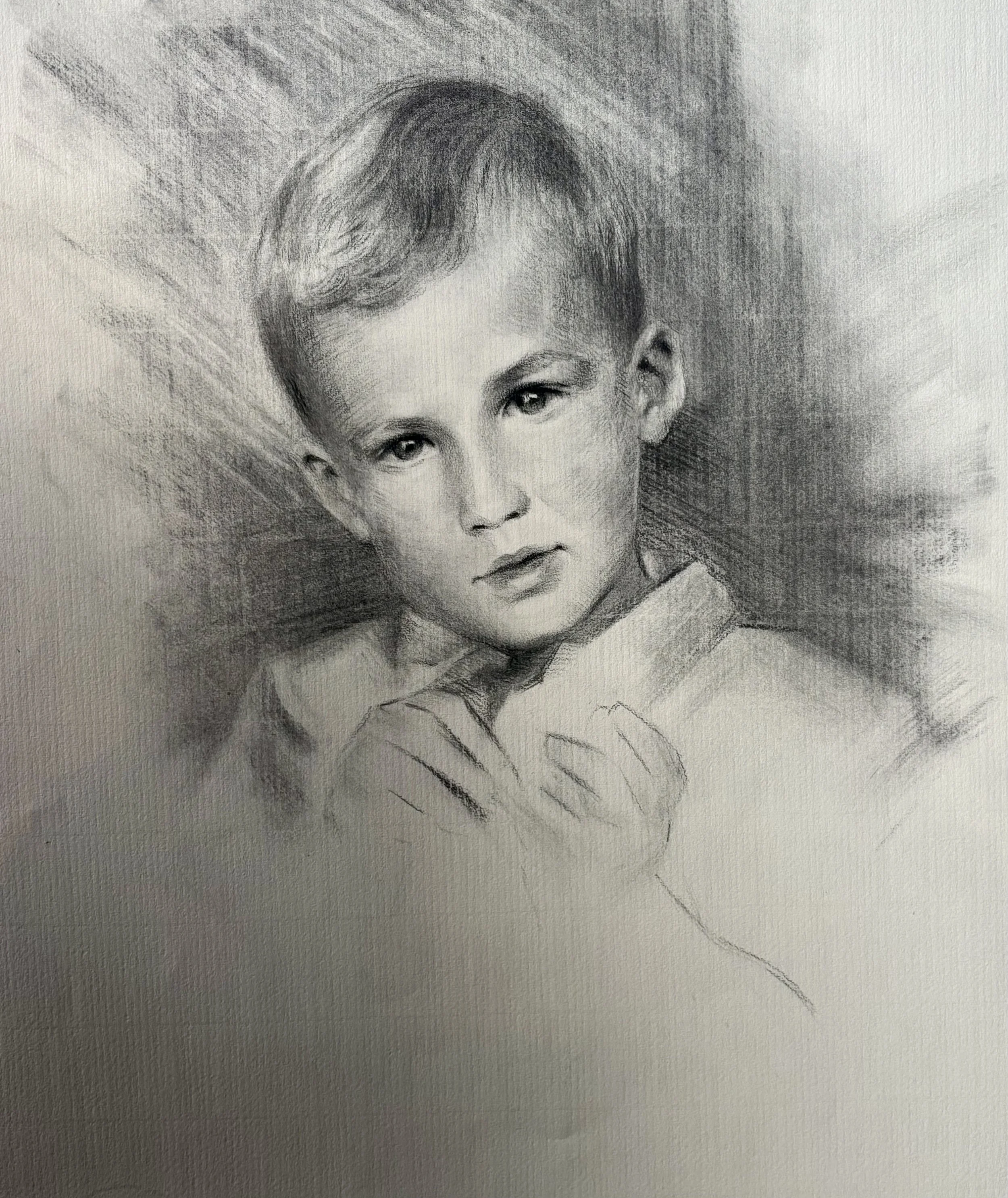


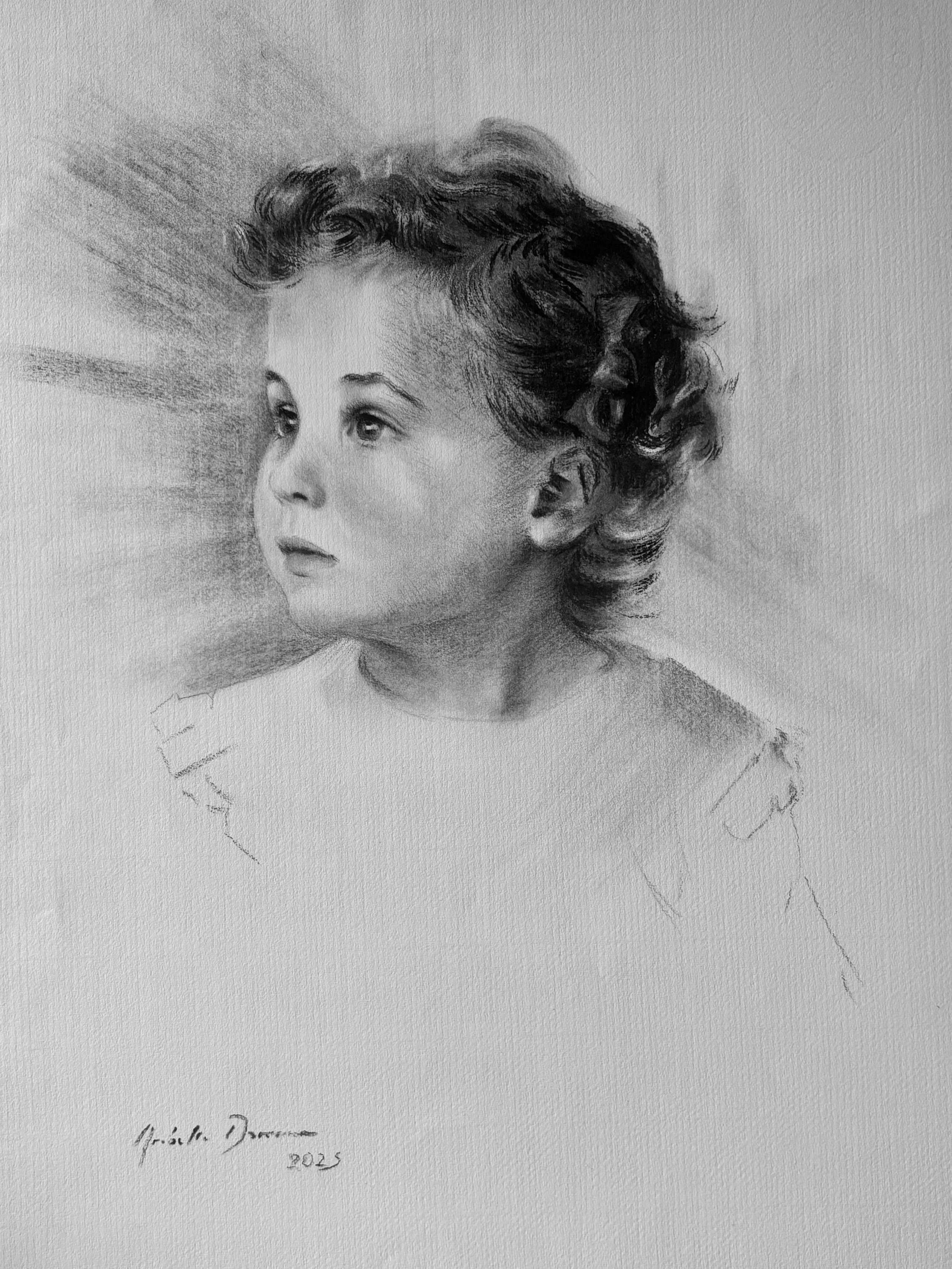


Dorman’s background and experiences—particularly her exposure to humanitarian contexts—inform this sensitivity. Even when the portraits are simple in composition, they carry a sense of gravity. The children are not reduced to symbols; they remain individuals, each rendered with dignity and care.
Arabella Dorman’s charcoal portraits of children are powerful because of their restraint. Rather than relying on elaborate detail or color, she uses minimal means to evoke complex emotional truths. The result is work that feels both intimate and universal - portraits that linger in the mind long after they are seen.
Lorem ipsum dolor sit amet, consectetur adipiscing elit. Vestibulum id ligula porta felis euismod semper.