
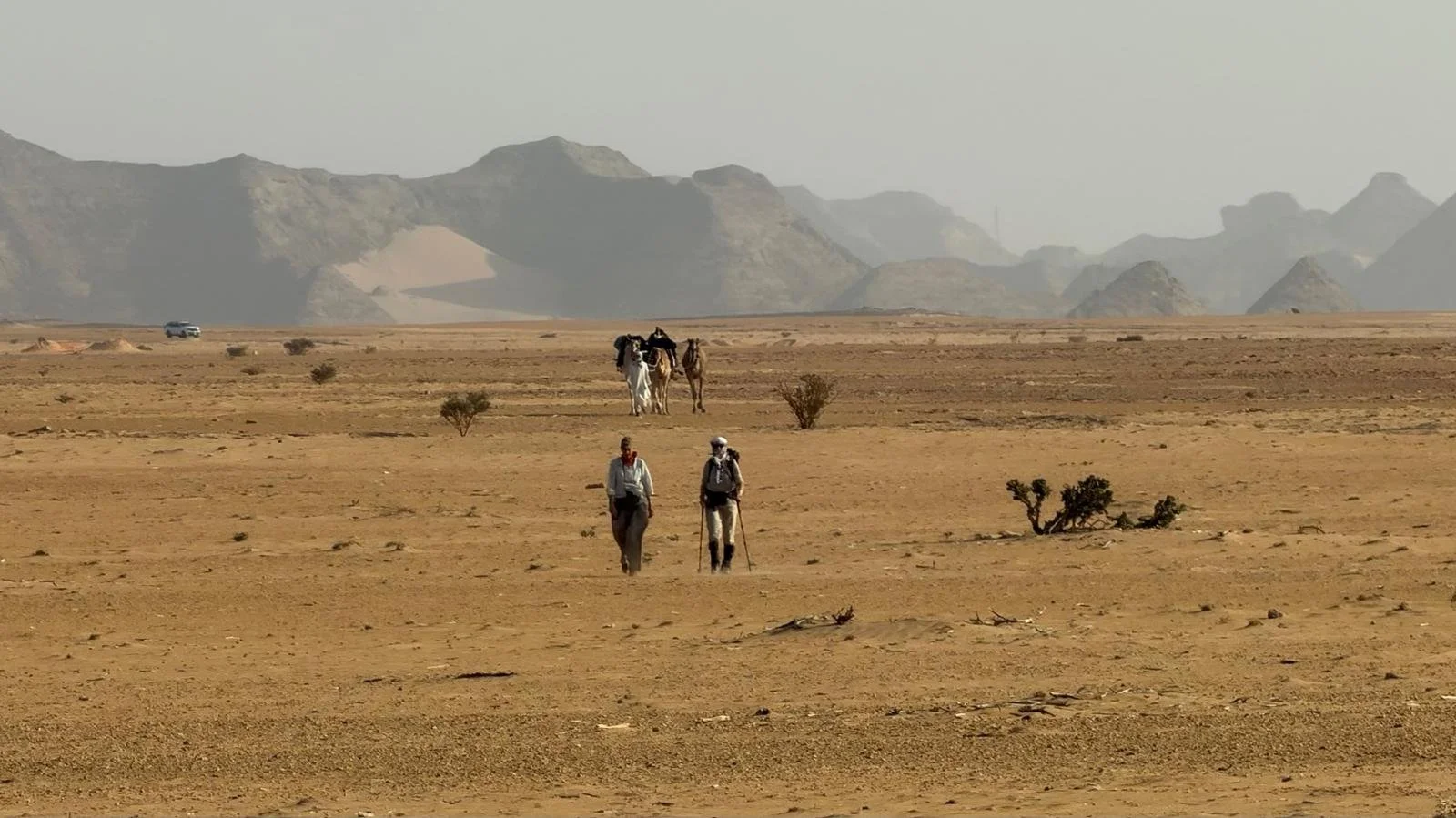
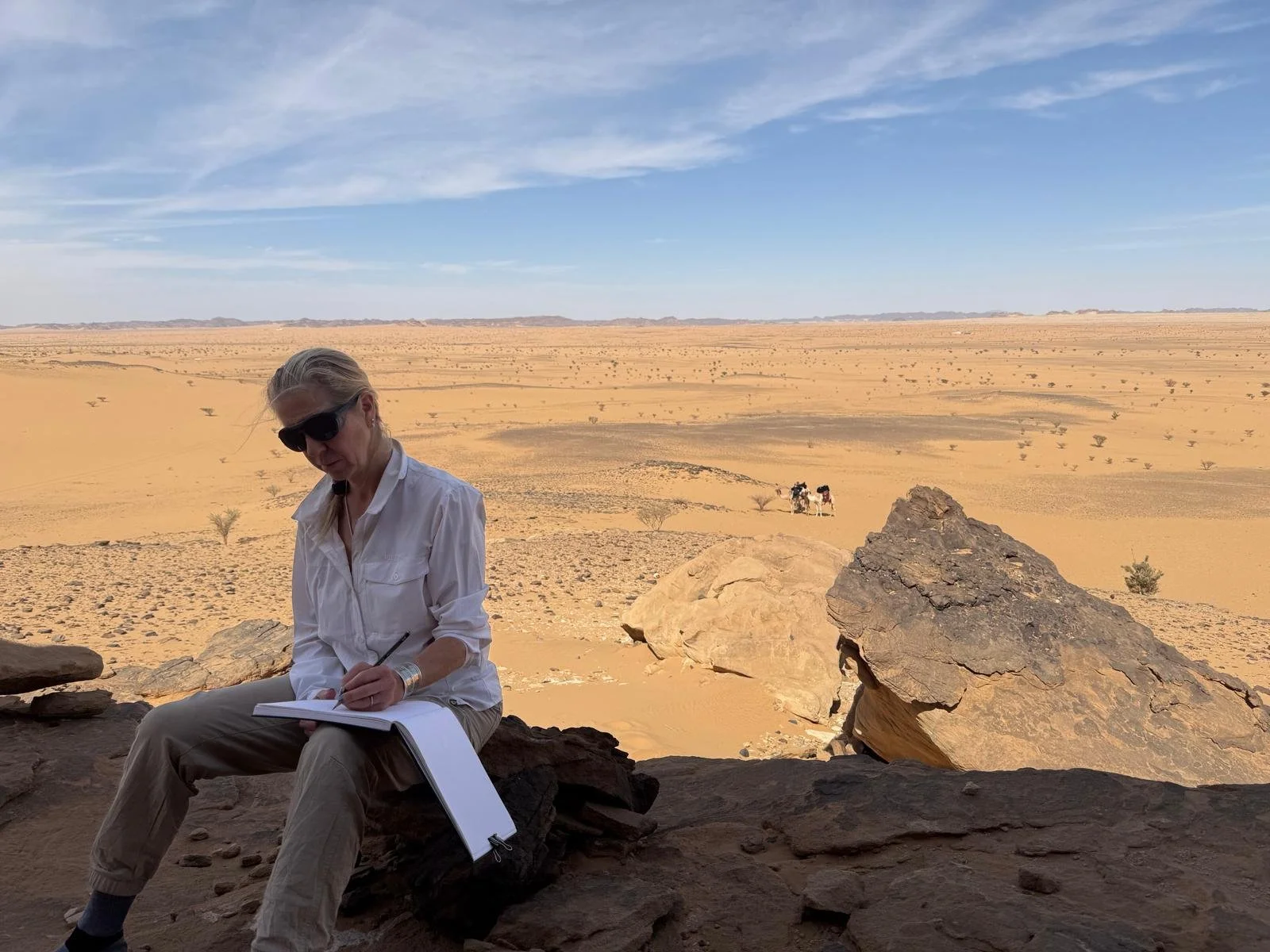
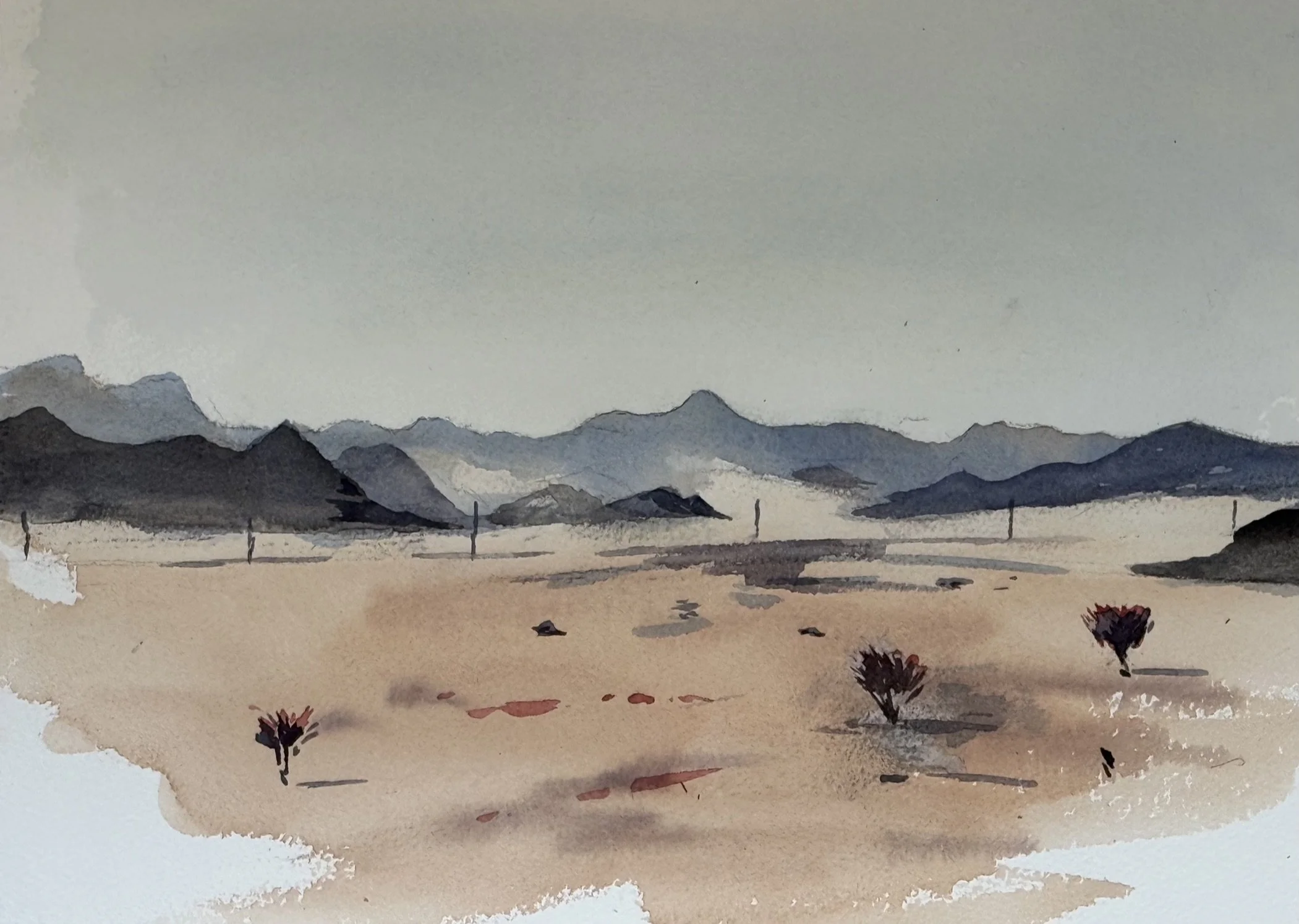
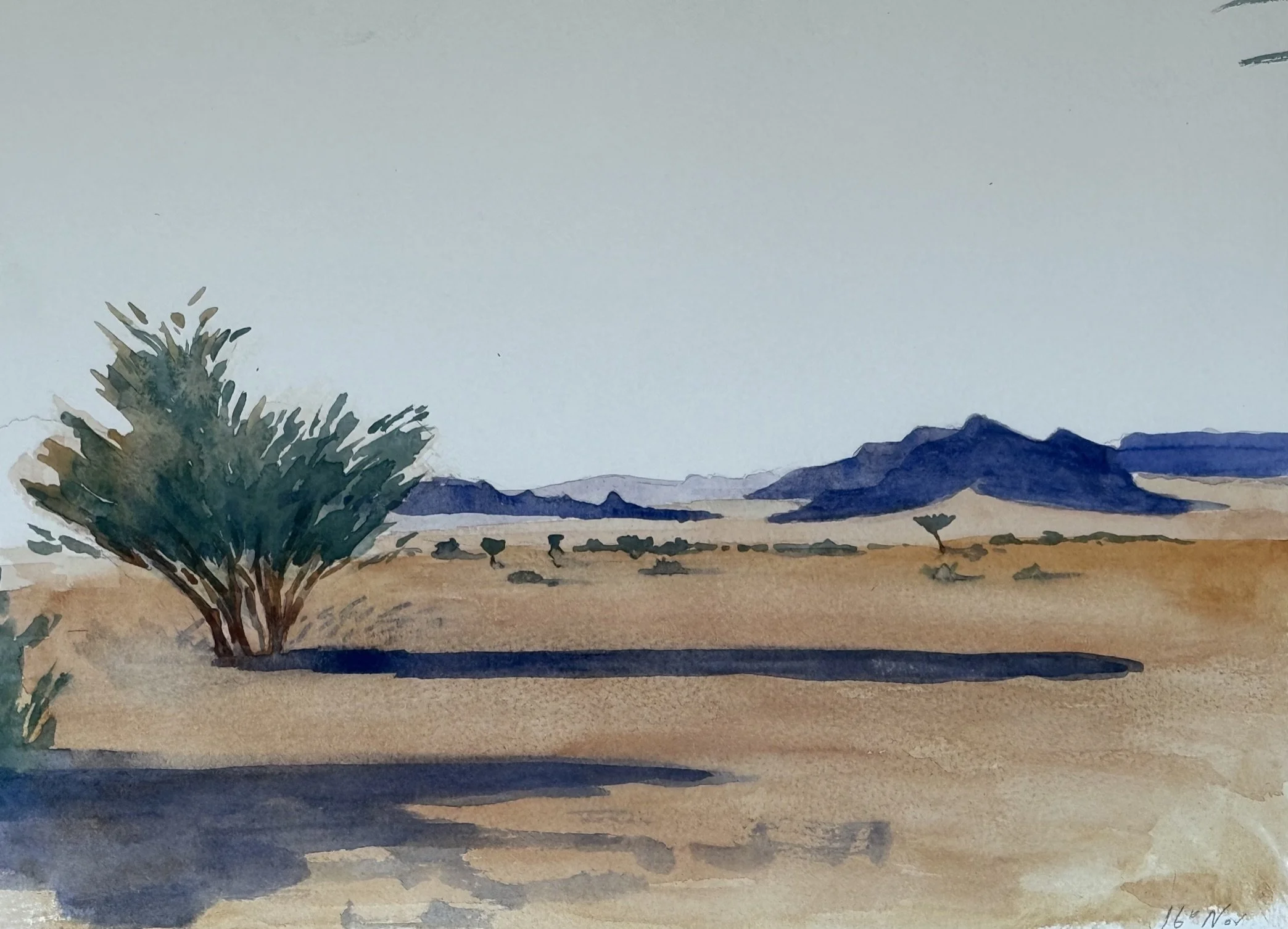
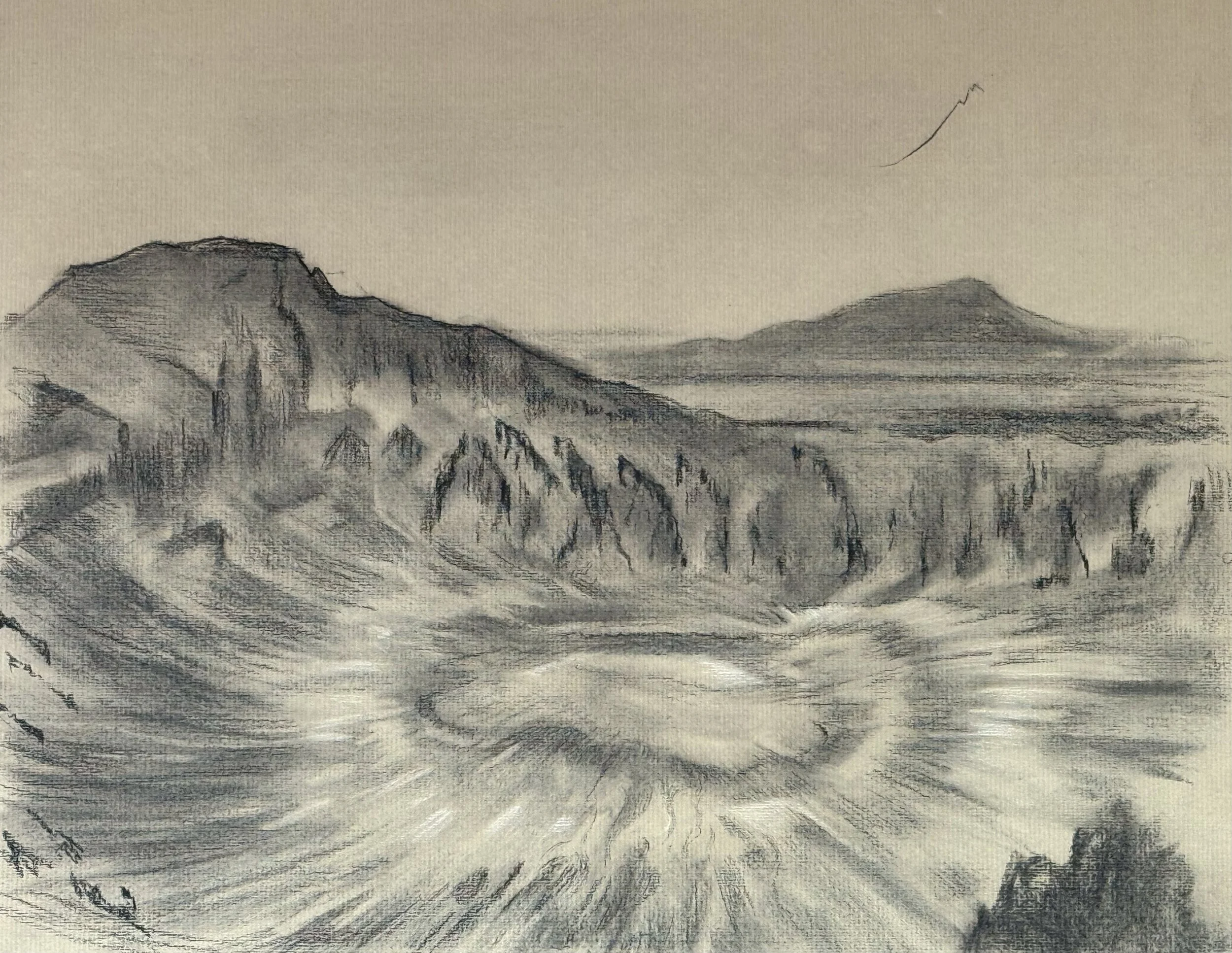
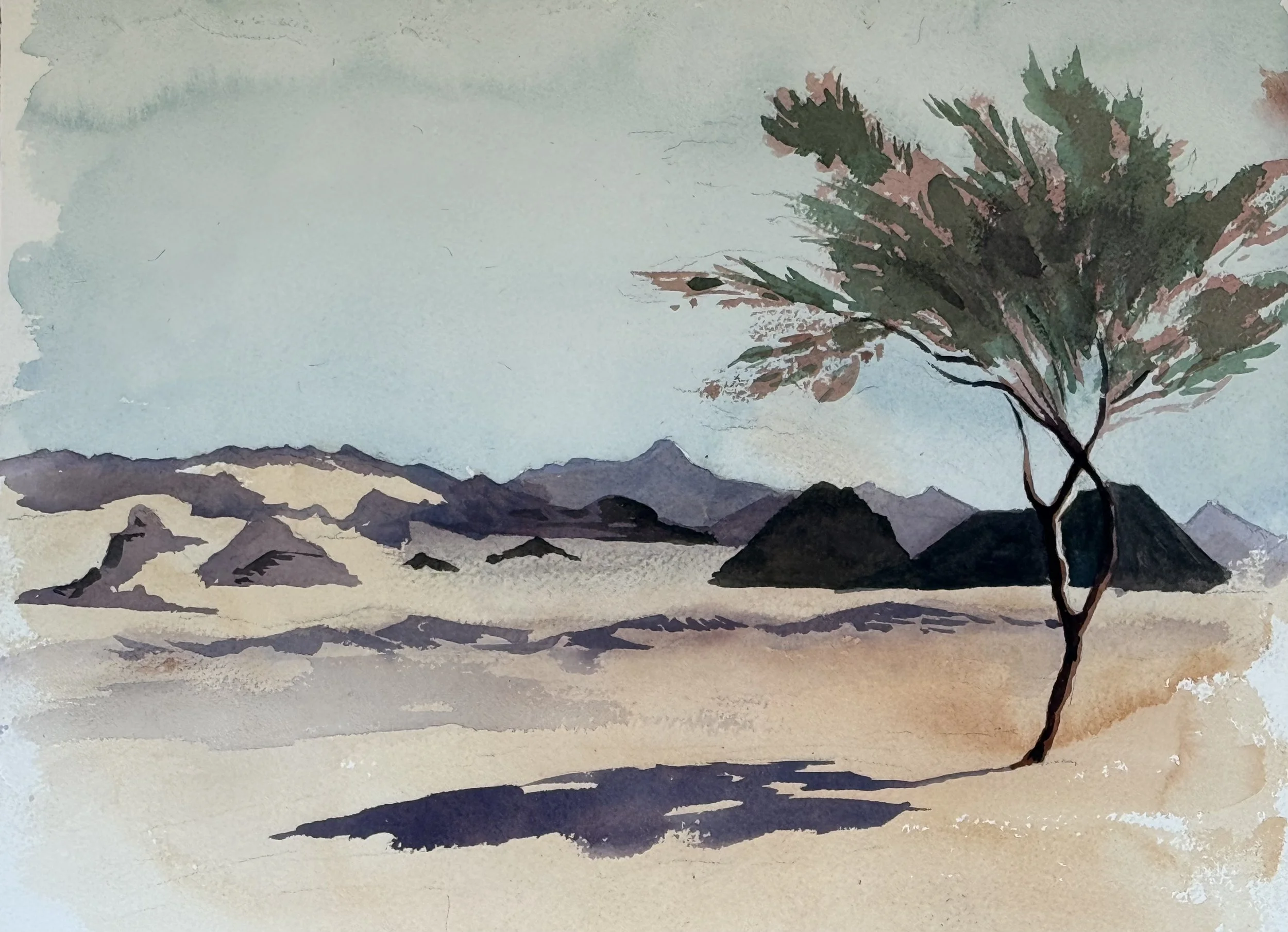
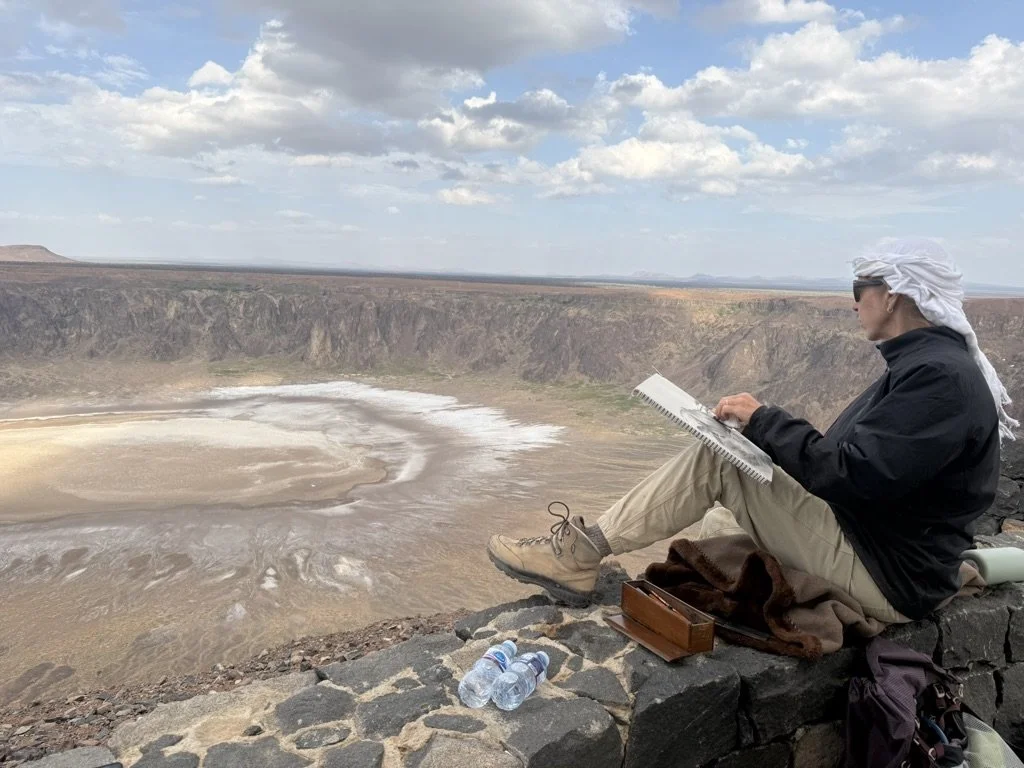
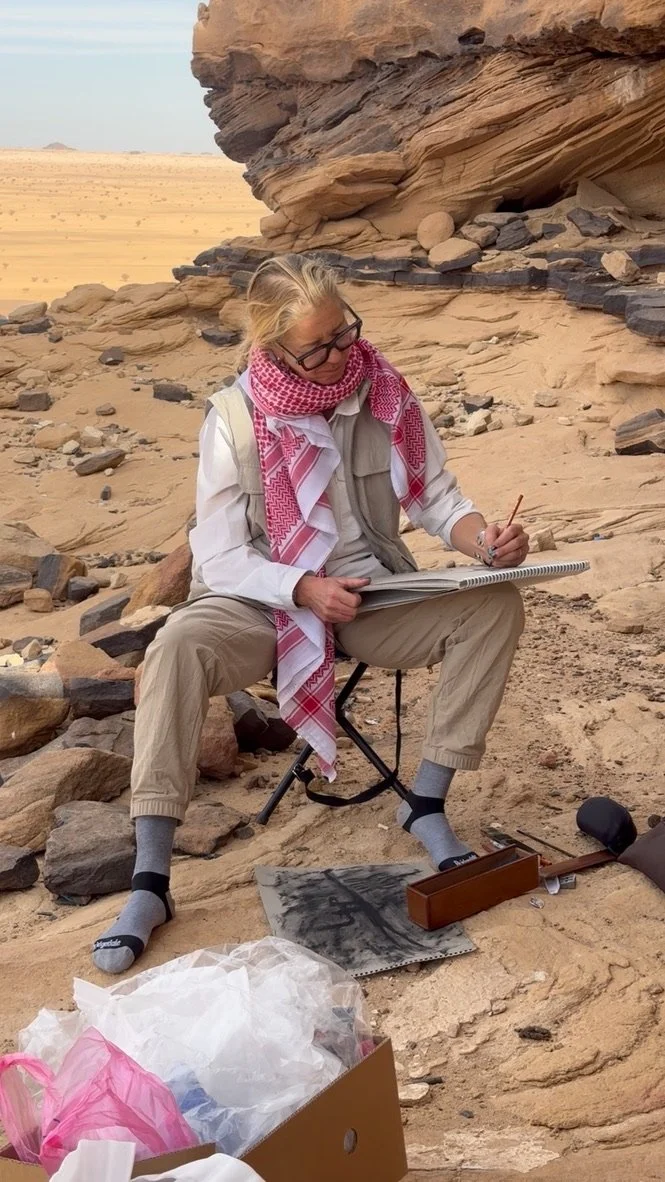
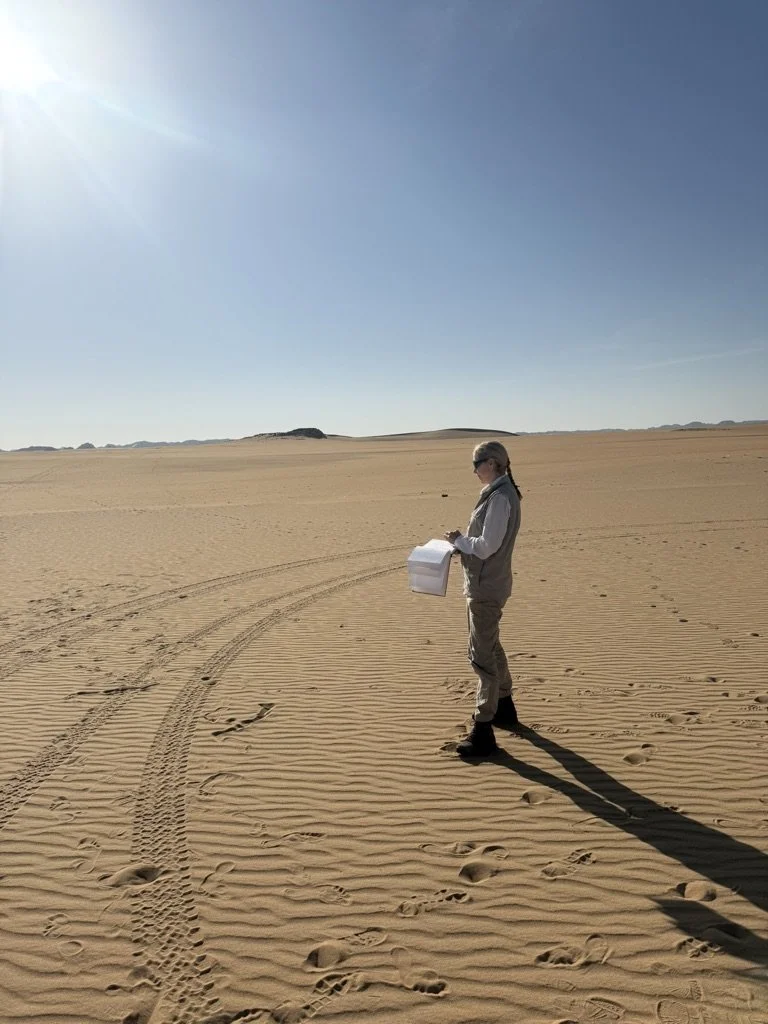
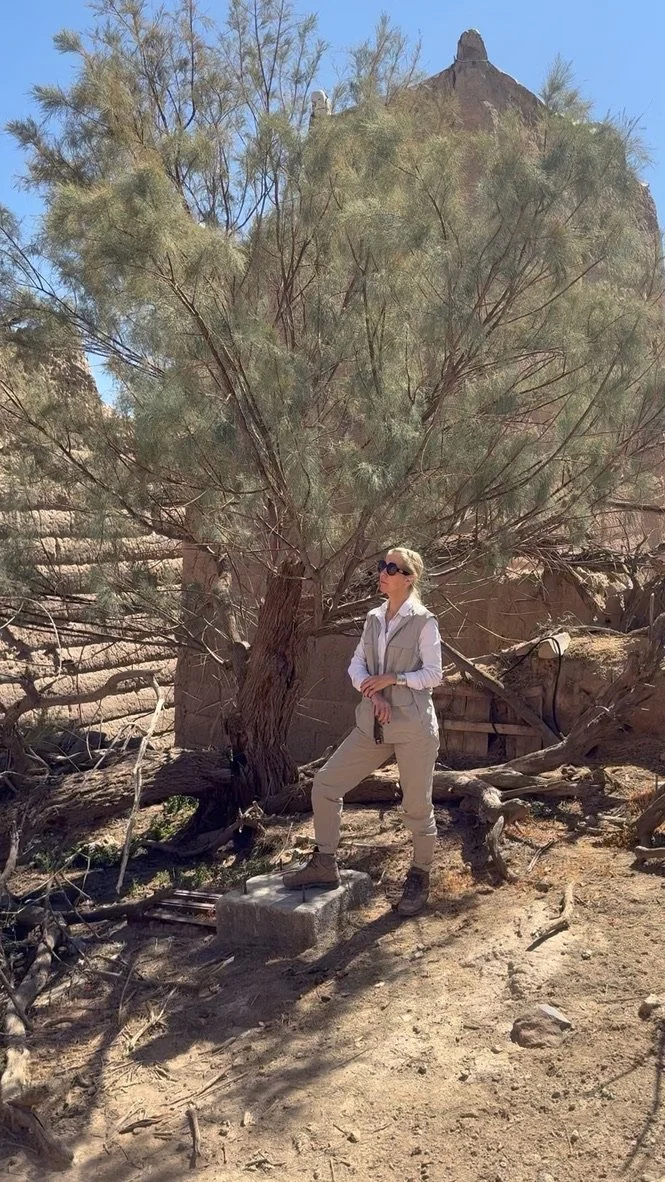
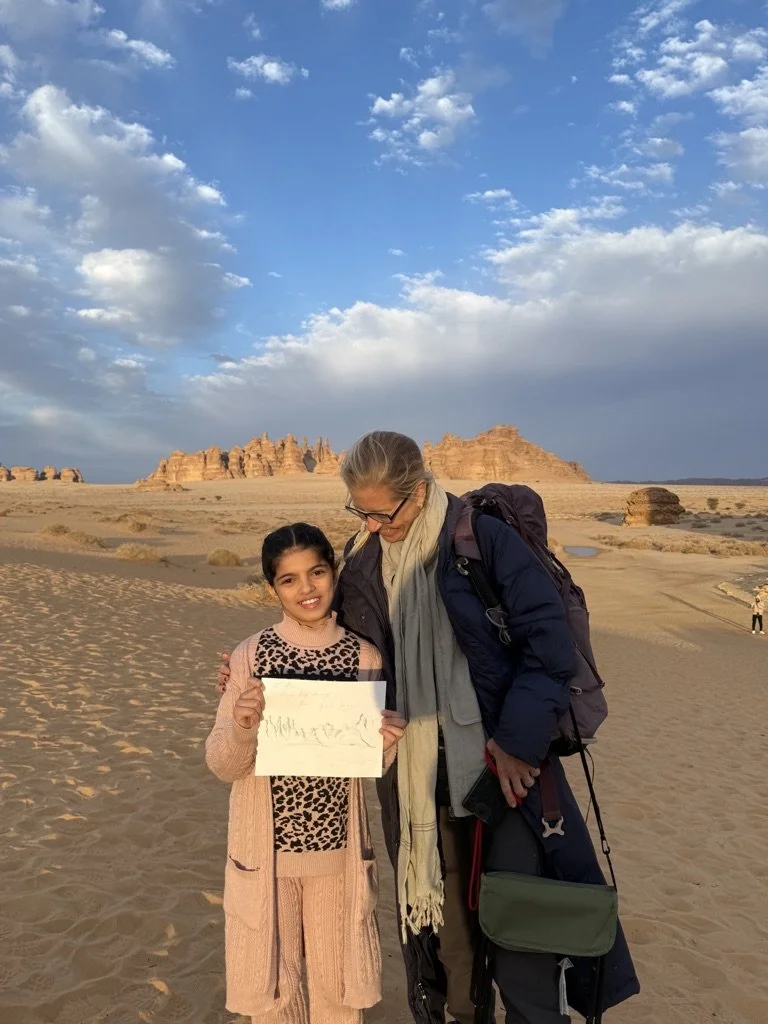
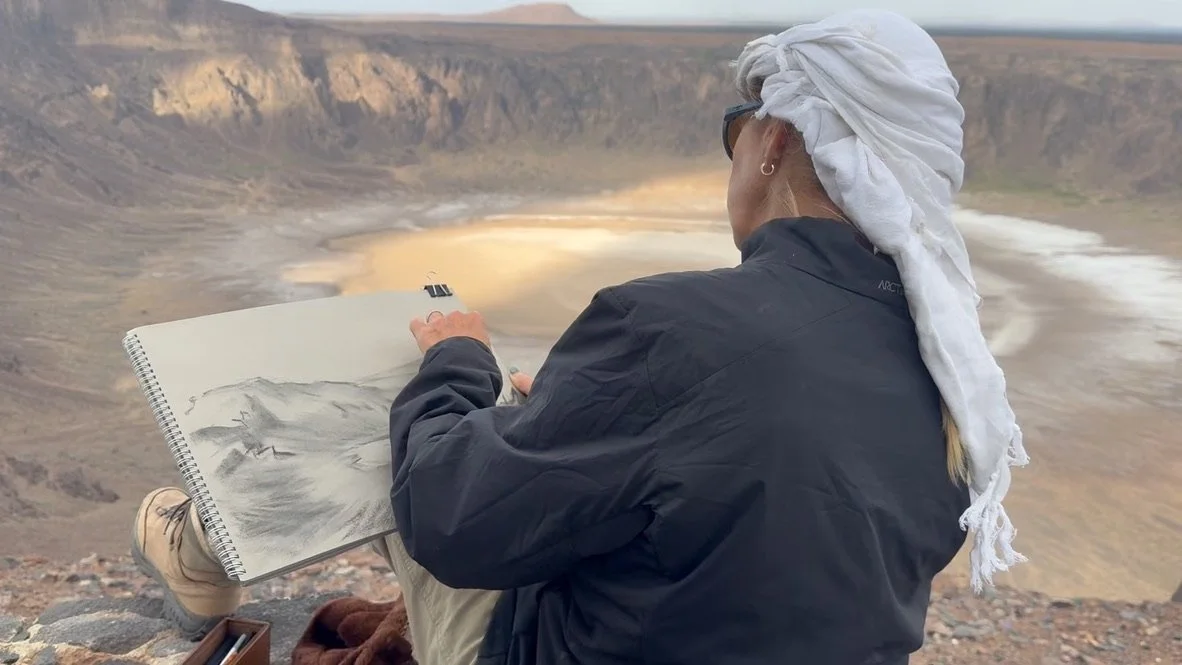
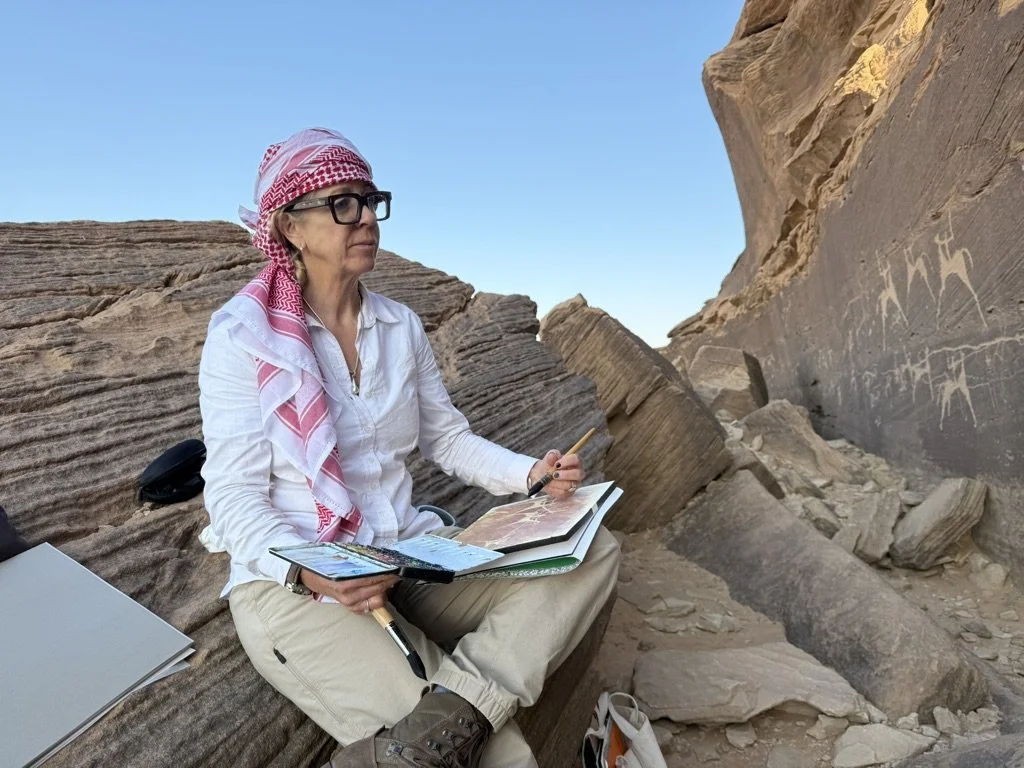
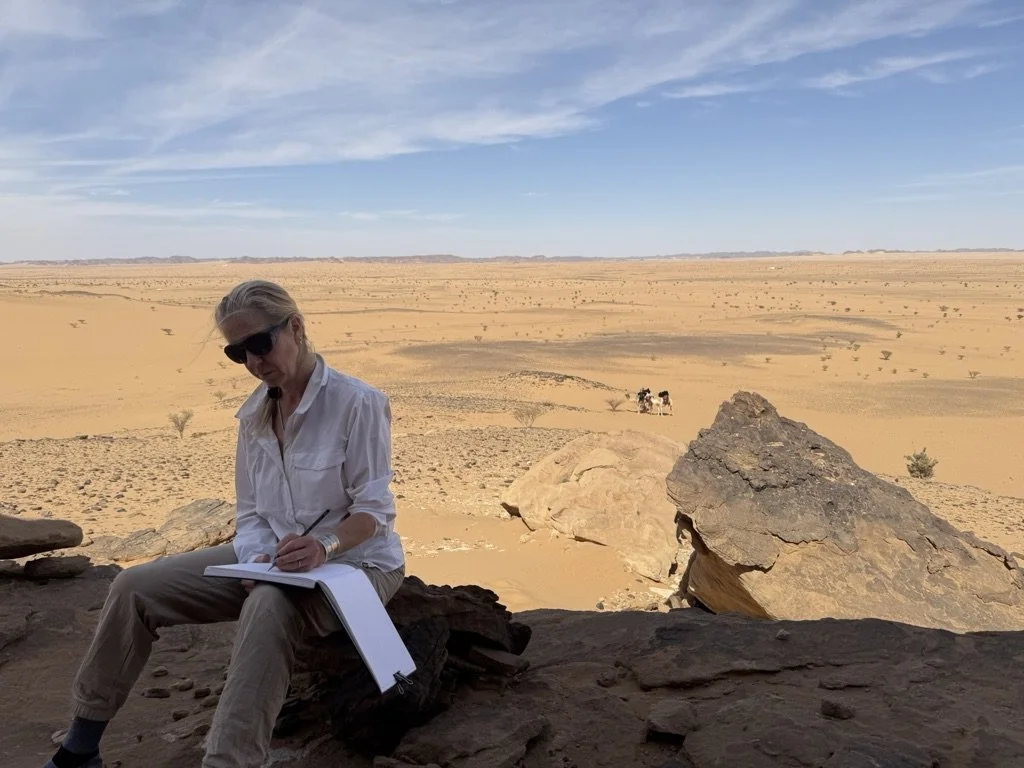
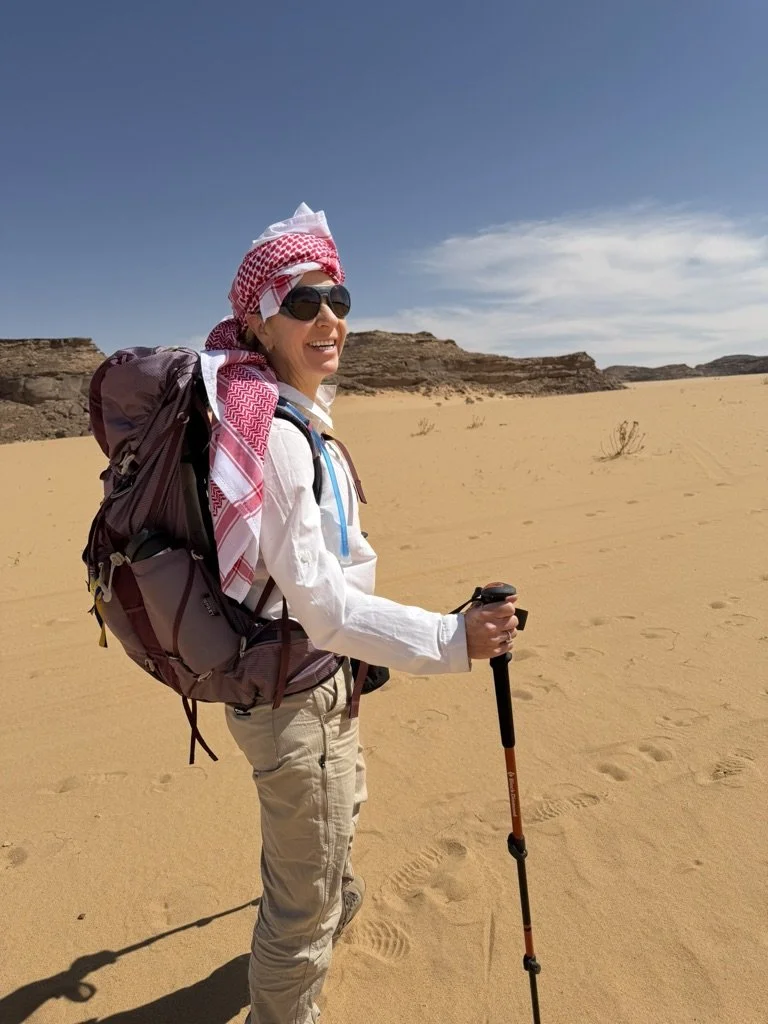
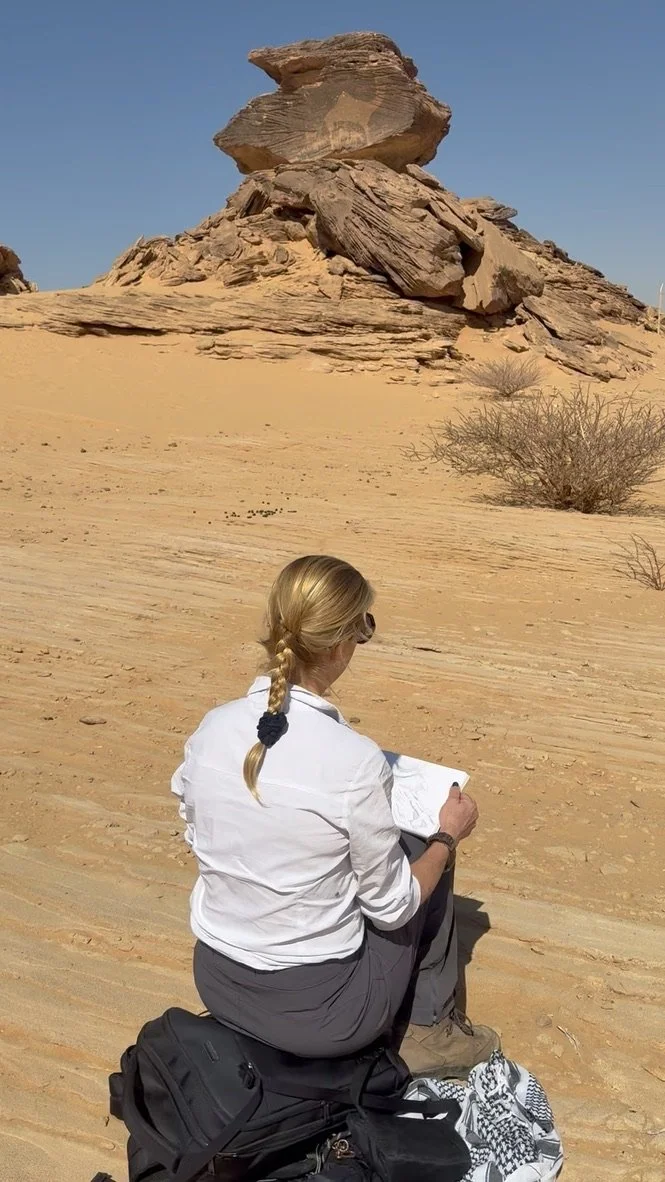
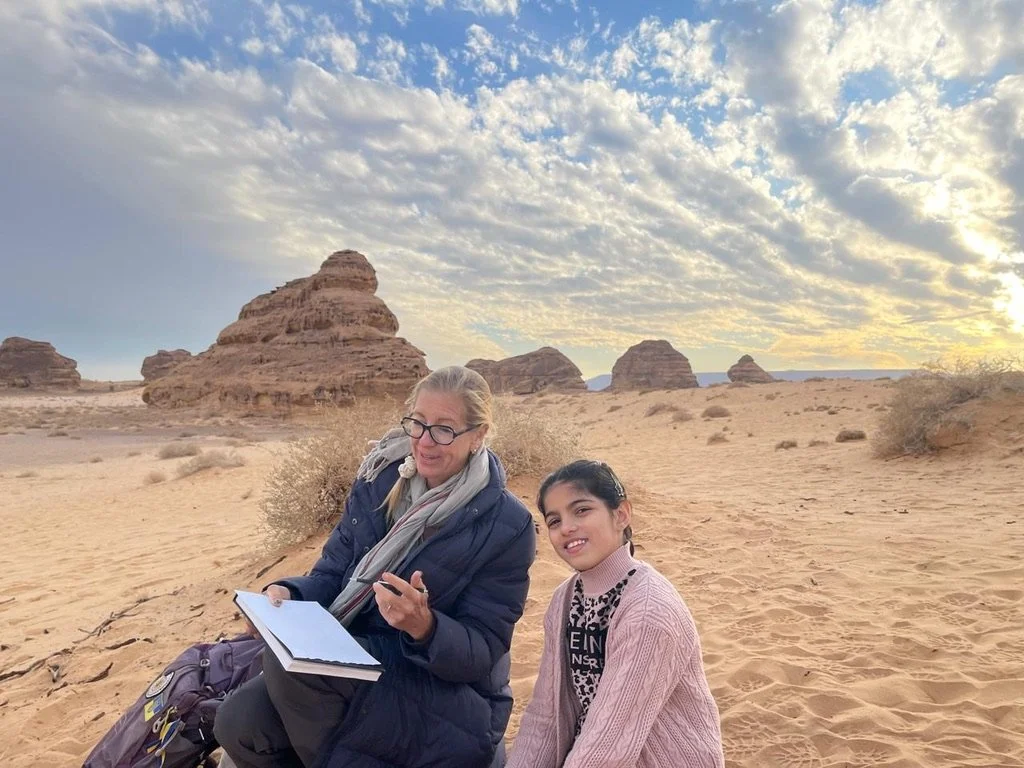
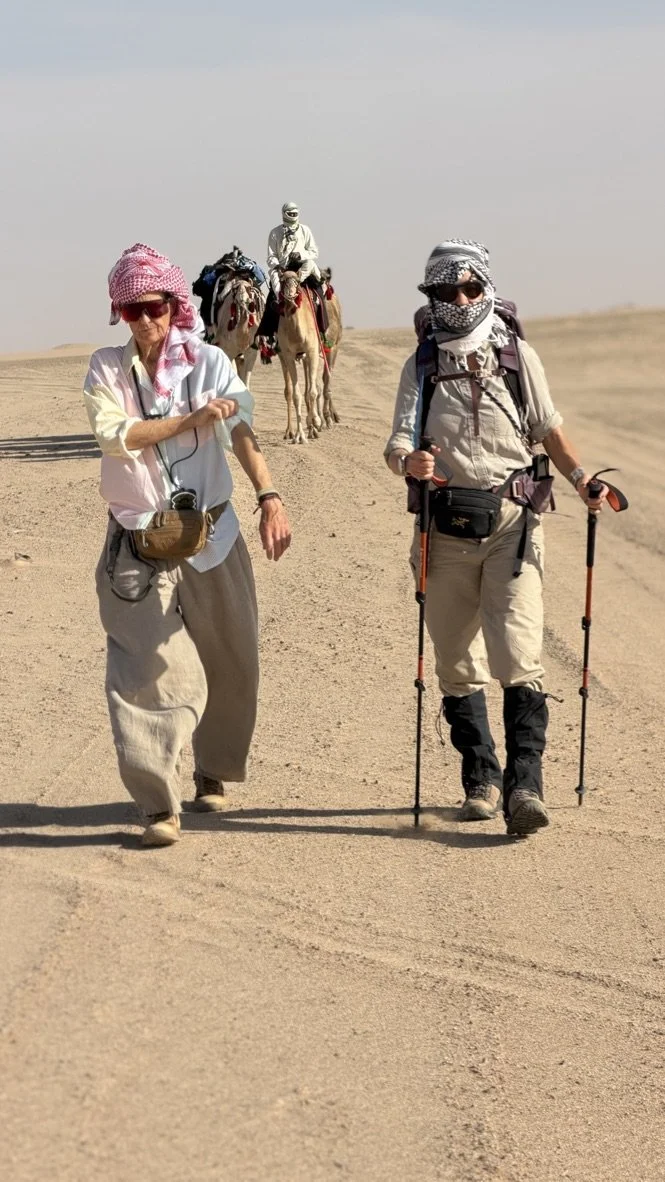
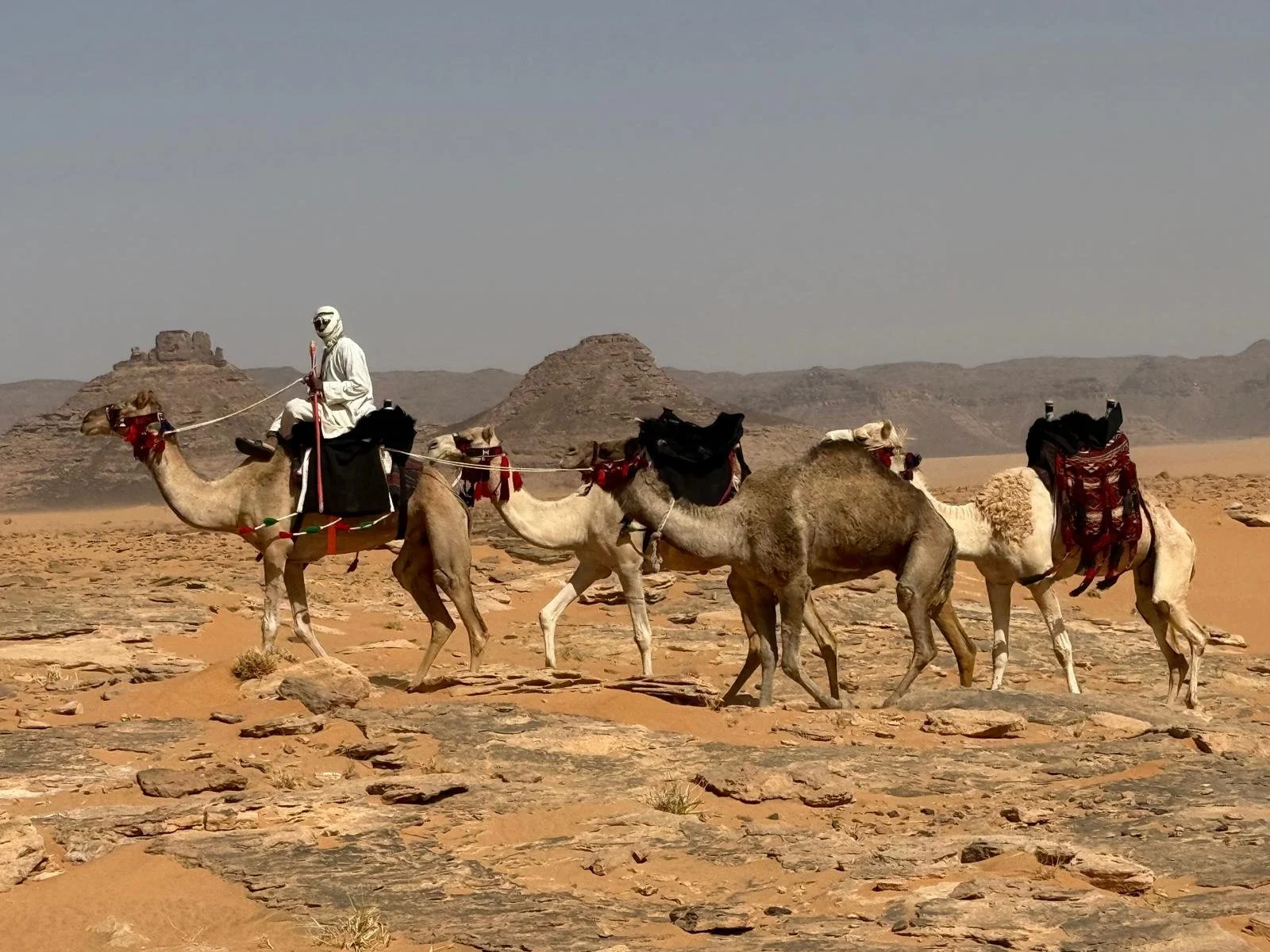
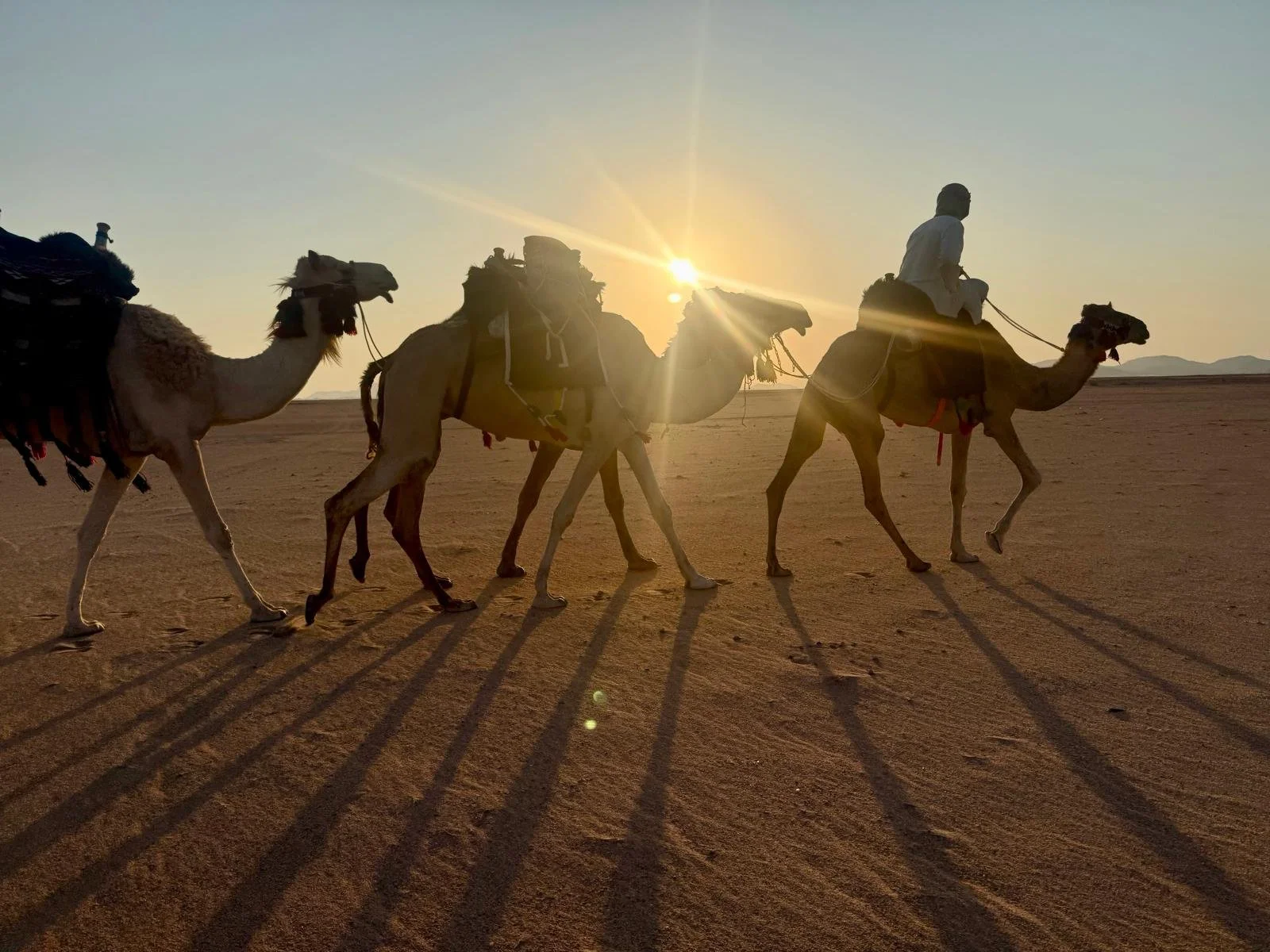
The Incense Route expedition has taken us on an extraordinary journey through time, space, and a rapidly changing world, tracing one of the world’s most ancient trade routes on foot — Najran in the south to the Gulf of Aqaba in the North, finishing opposite Dahab in Sinai. As the expedition artist, I hope to reveal the astonishing beauty, depth, and mystery of a land and people that have long been hidden from the world.
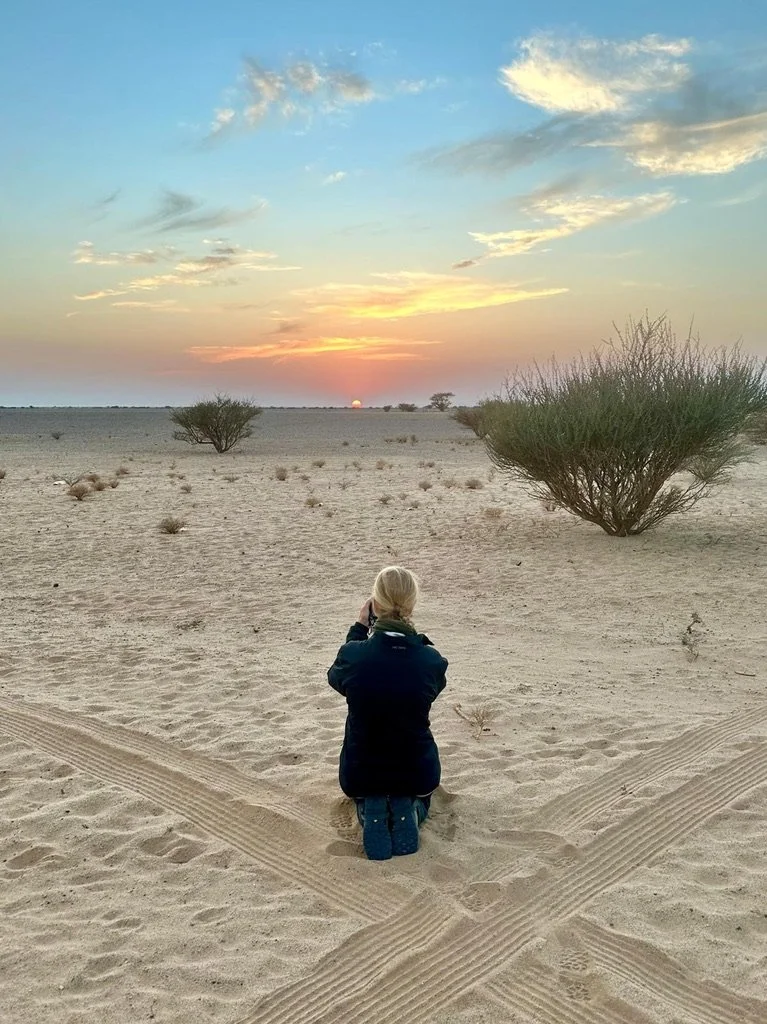
Walking this ancient trade route has revealed the rich diversity of the Kingdom of Saudi Arabia — its landscapes, cultures, histories, and voices — and the ways in which past and present remain deeply connected. The desert is imbued with a silence we have largely driven from our modern lives, and its people embody a timeless hospitality, warmth, and kindness that can feel lost in our fast-paced world. At the same time, this journey speaks to a nation in motion. As Saudi Arabia moves towards Vision 2030, the expedition offers a counterpoint to dominant narratives, presenting a more nuanced, human story — one rooted in history yet looking confidently to the future. To walk the Incense Route today is to walk a living thread that connects ancient exchange with contemporary transformation, and past traditions with new possibilities.
This was the third in a trilogy of female-led (with explorers Rosie Stancer & Pom Oliver ) desert expeditions that we began in the Aral Sea (2022) and continued across the Sinai Peninsula, Egypt, (2023). Showcasing female-led innovation in culture and conservation, these expeditions explore how heritage and creativity might look back to the lessons of the past, so as to fuel a sustainable future of tomorrow.
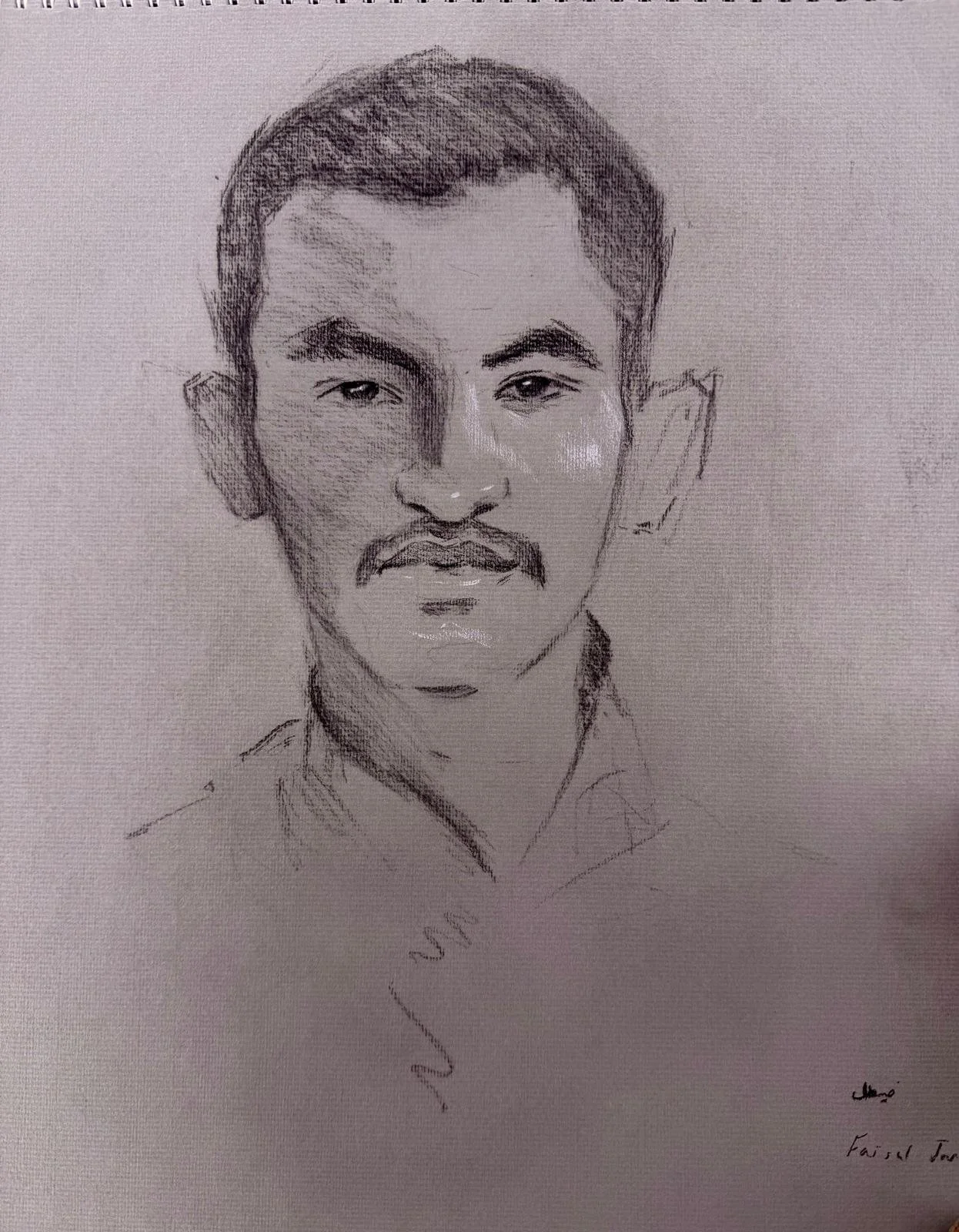
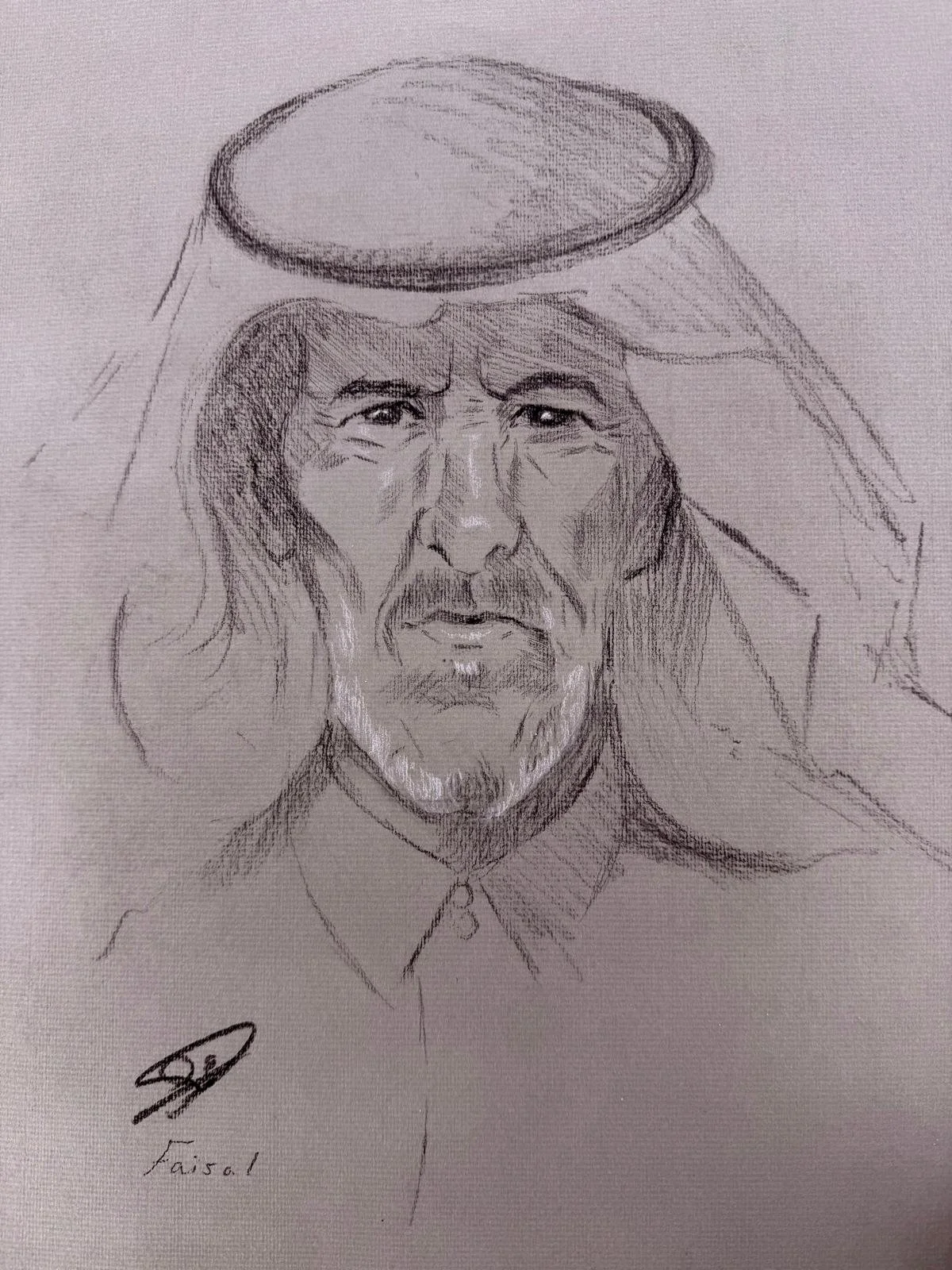
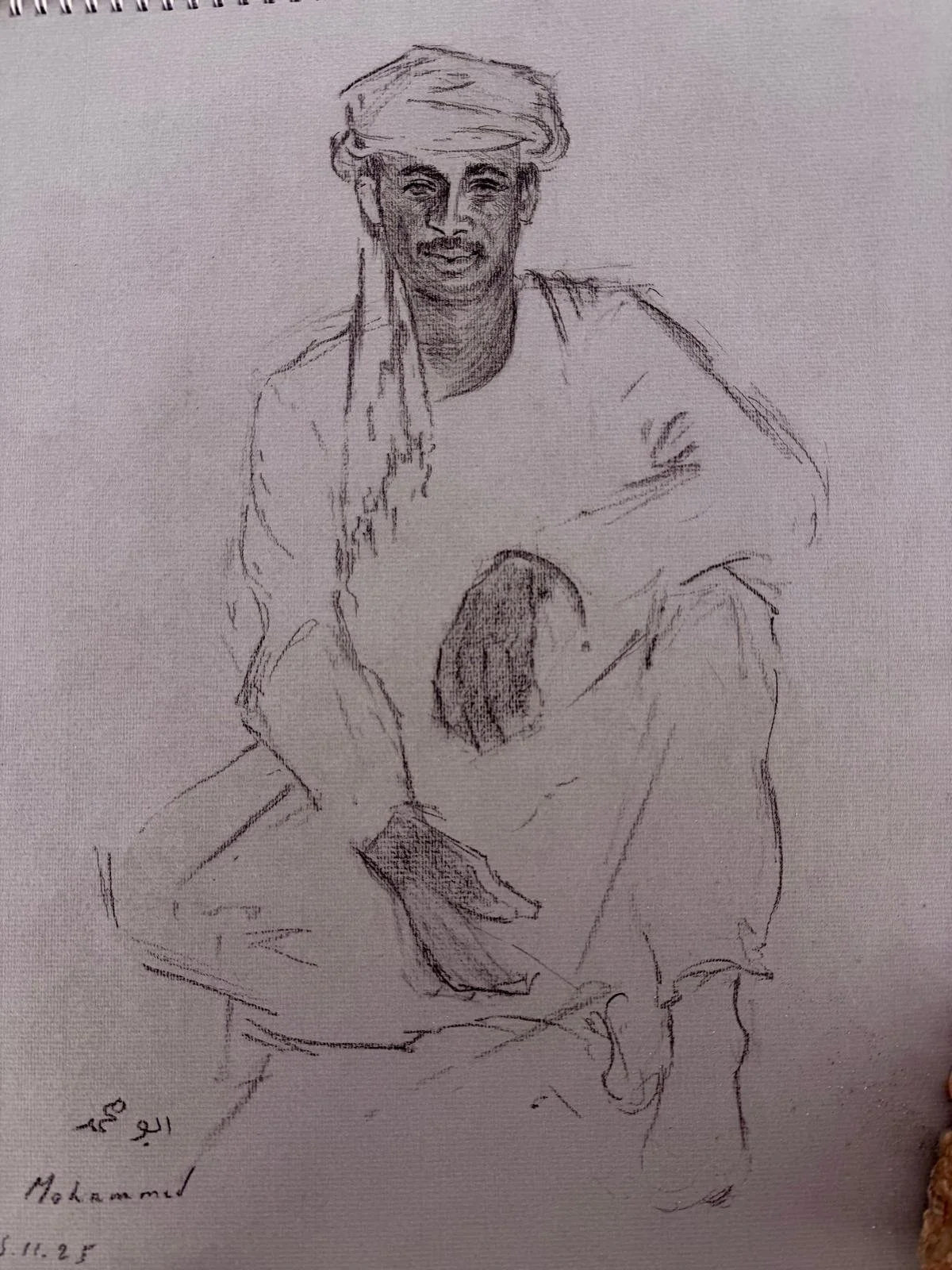
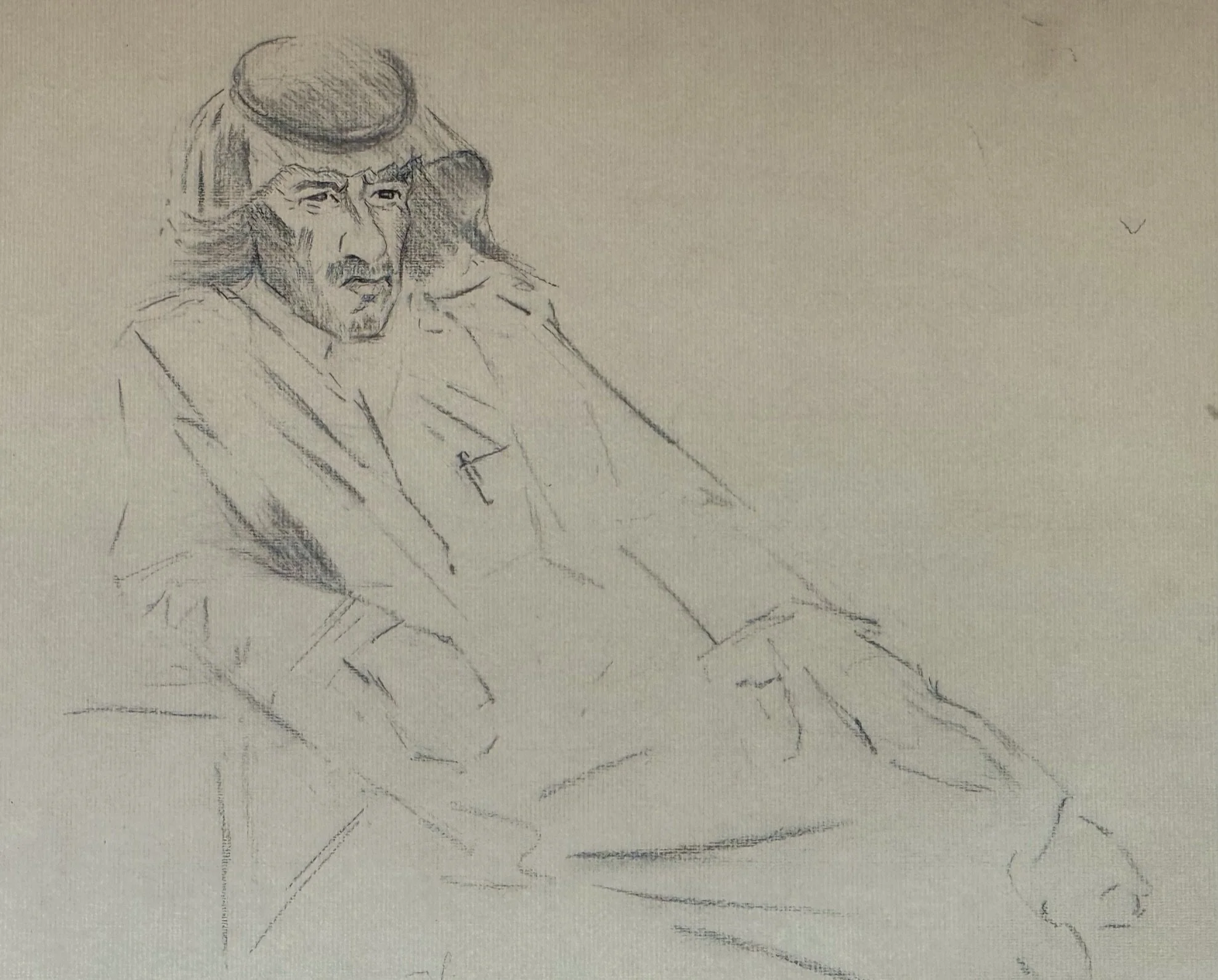
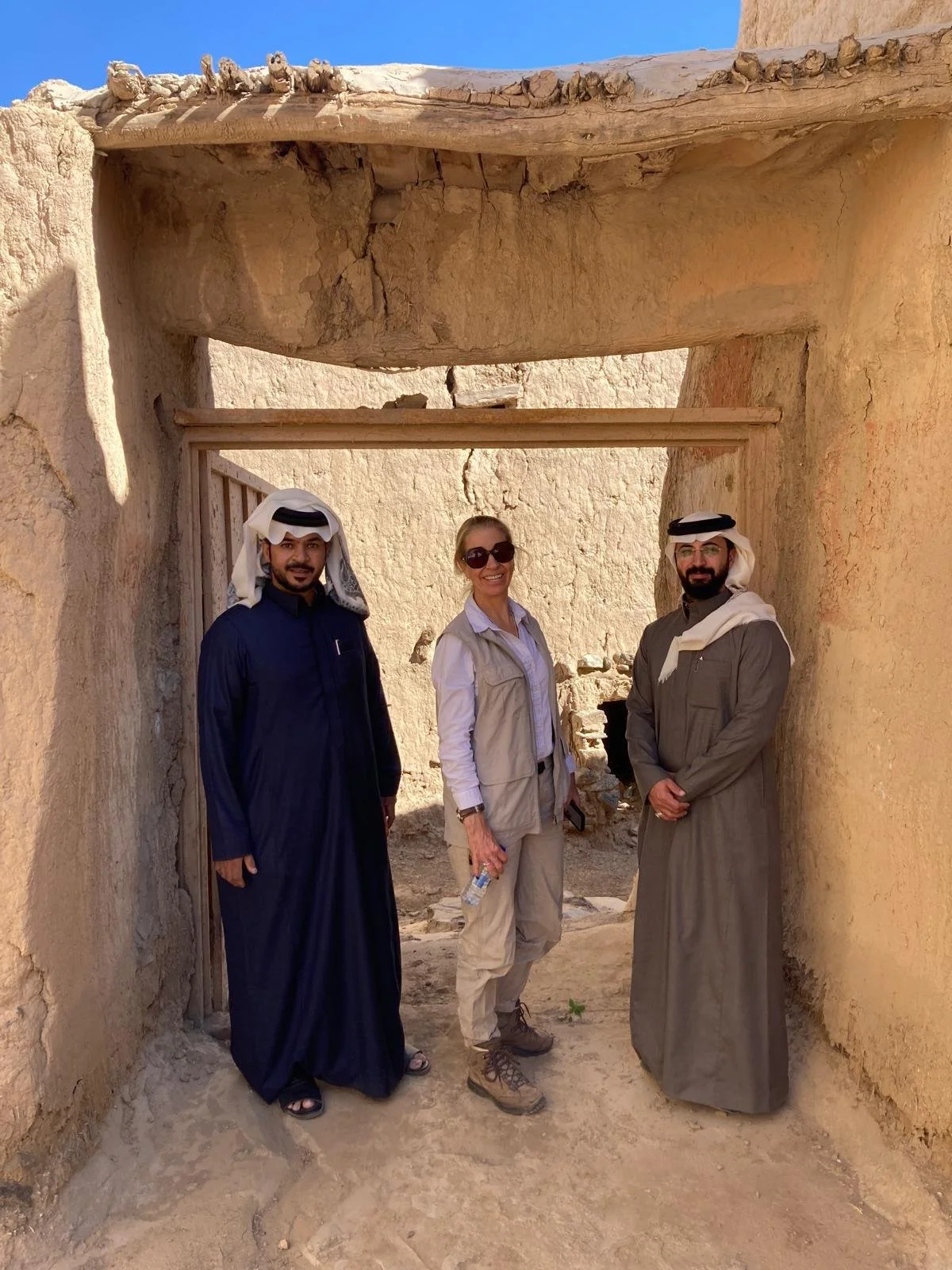
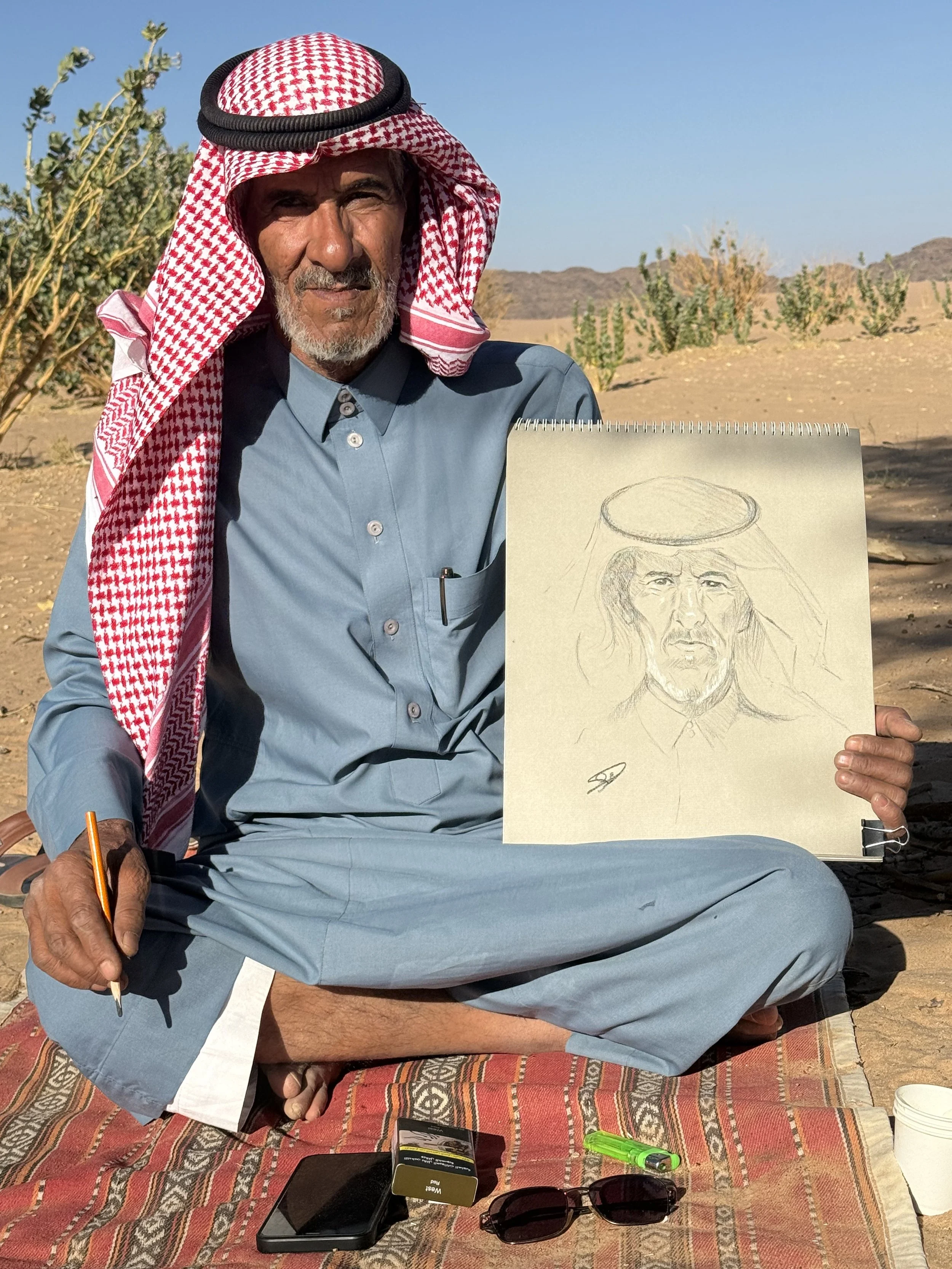
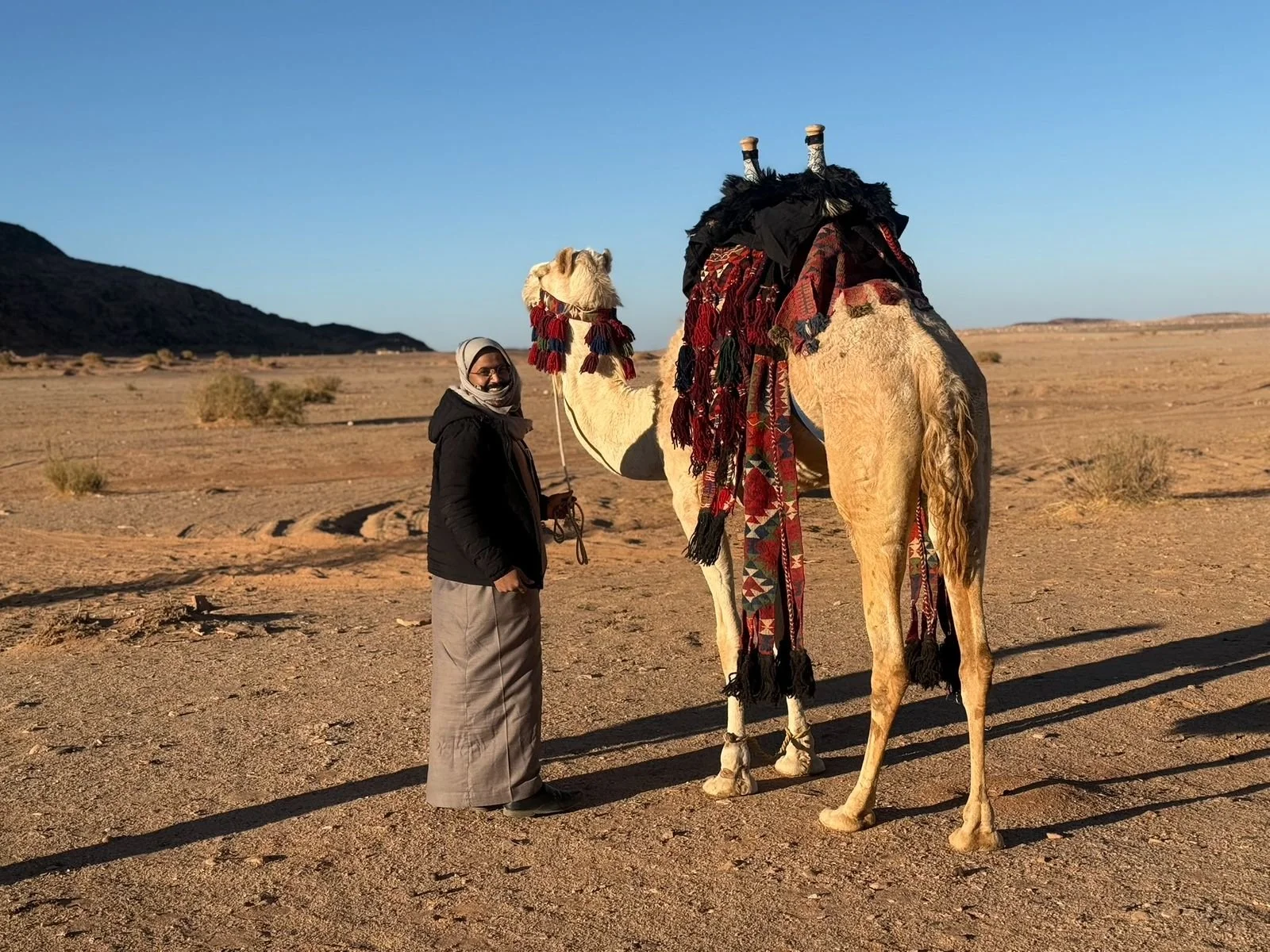
Meet the incredible team - our wonderful Bedouin expedition team, who took exceptional care of us throughout. Along the way, I had the honour of sketching (from left to right) Faisal Junior, Faisal Senior and Abu Mohammed.
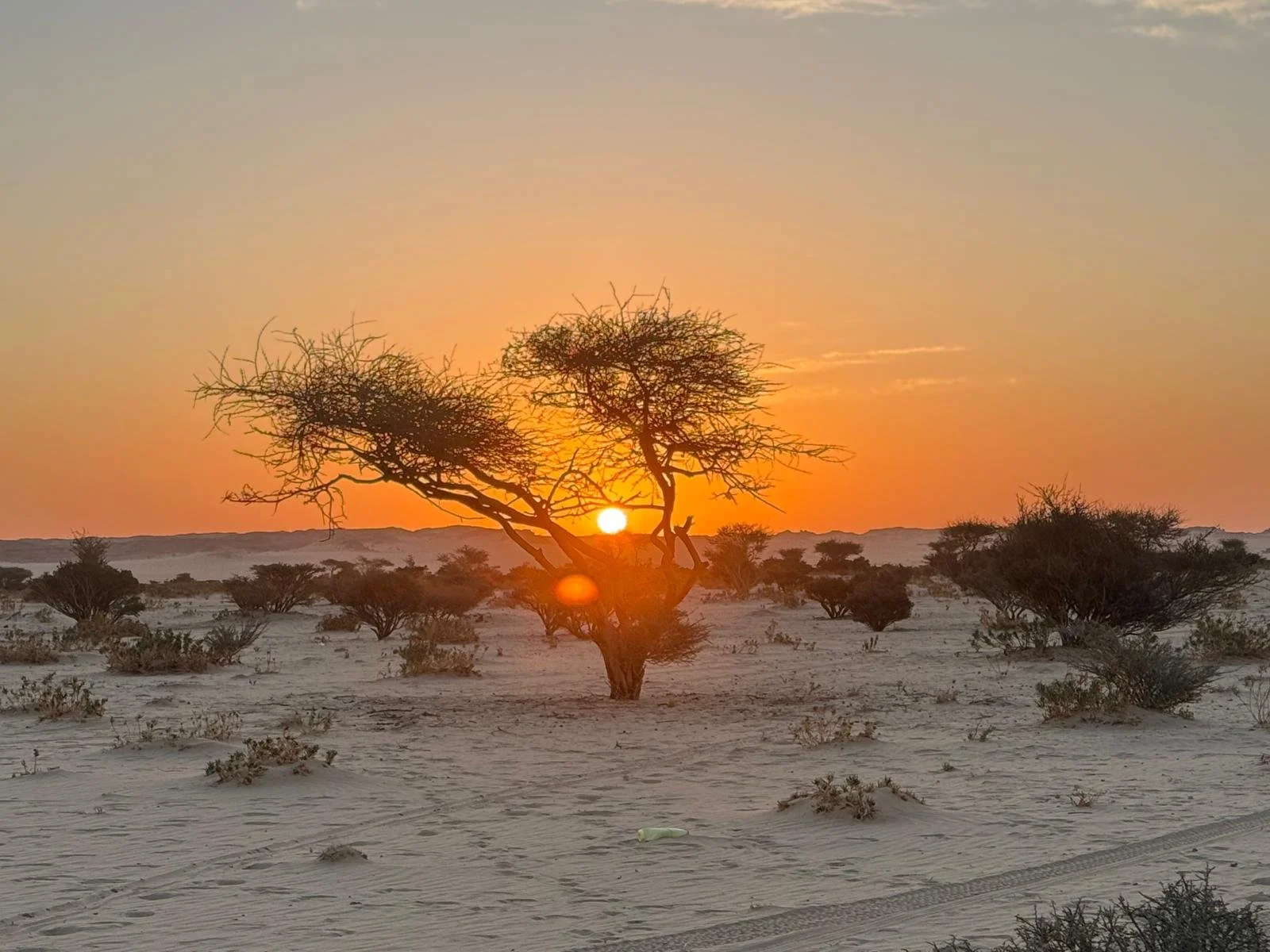
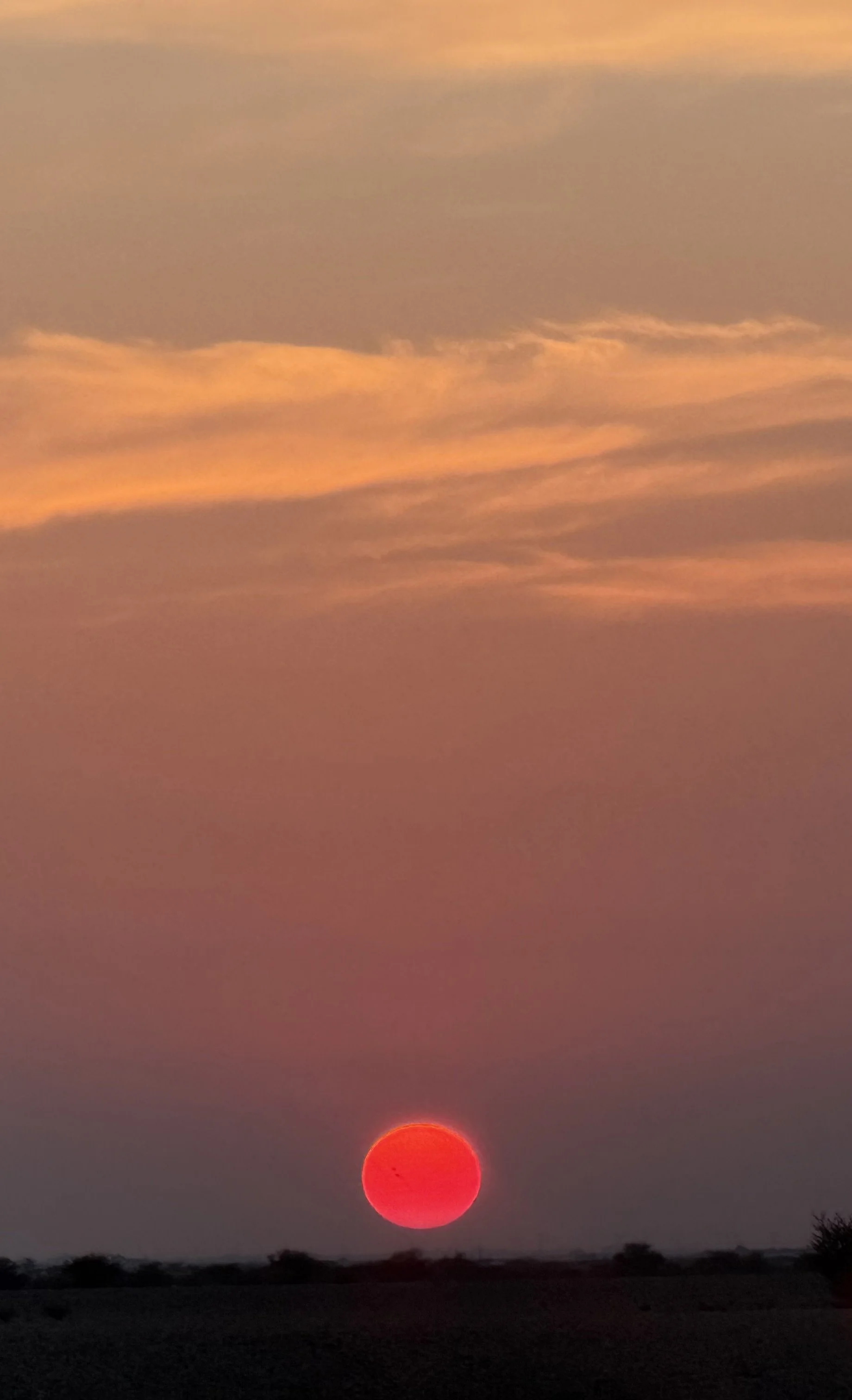
I have been working through my Saudi field notes and sketchbooks, and, naturally, reflecting on the rapidity of change in that once peaceful region, in the short time that I have been home. I can't help but think that these quiet scenes that I captured remain unchanged despite what goes on around them. The ravages of war come and go, but the beauty of the land is timeless - and it is that beauty that will endure.
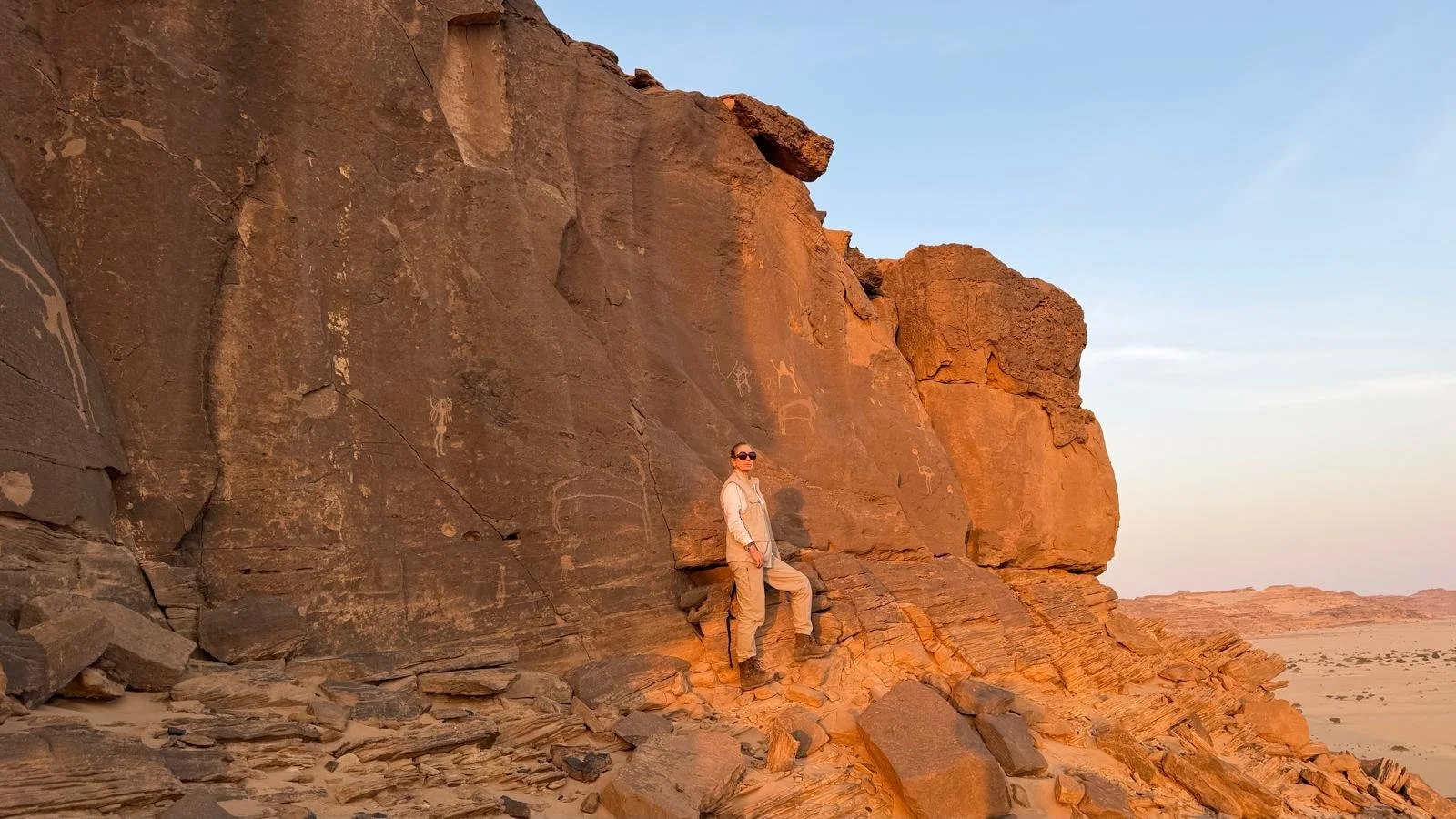
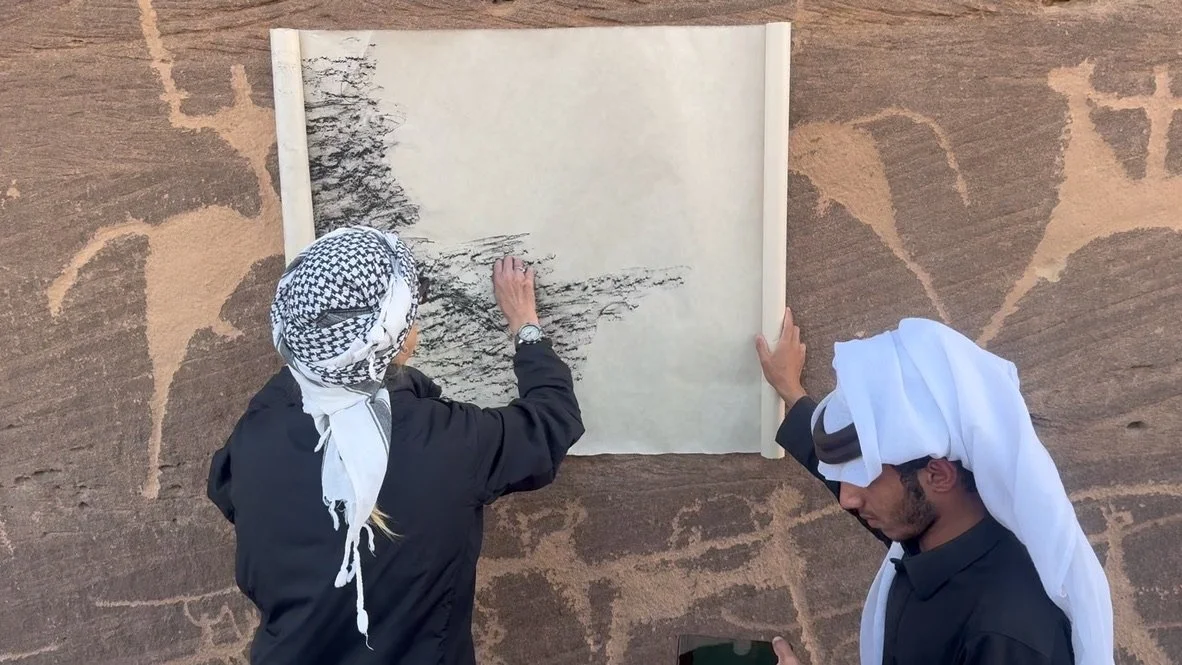
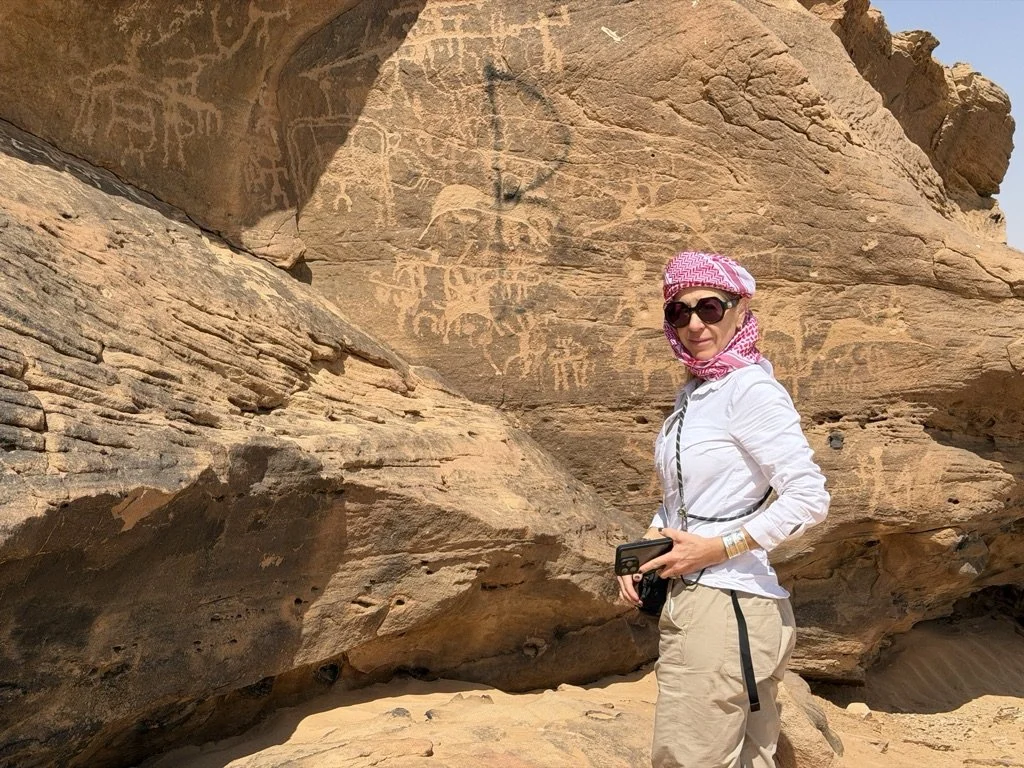
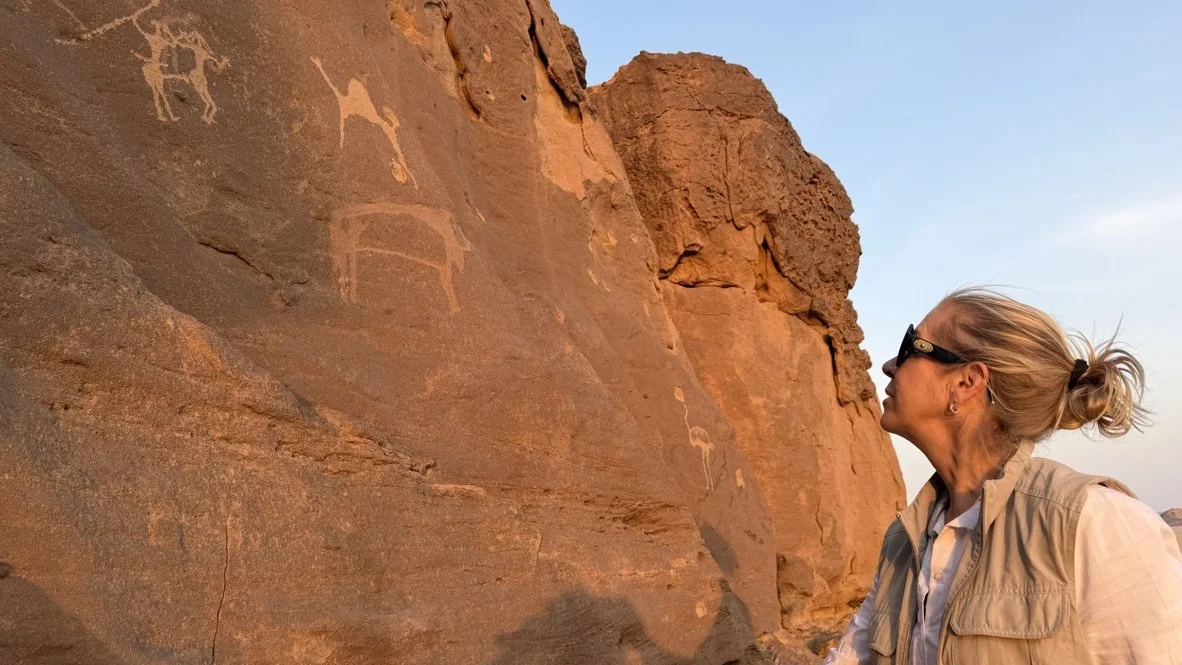
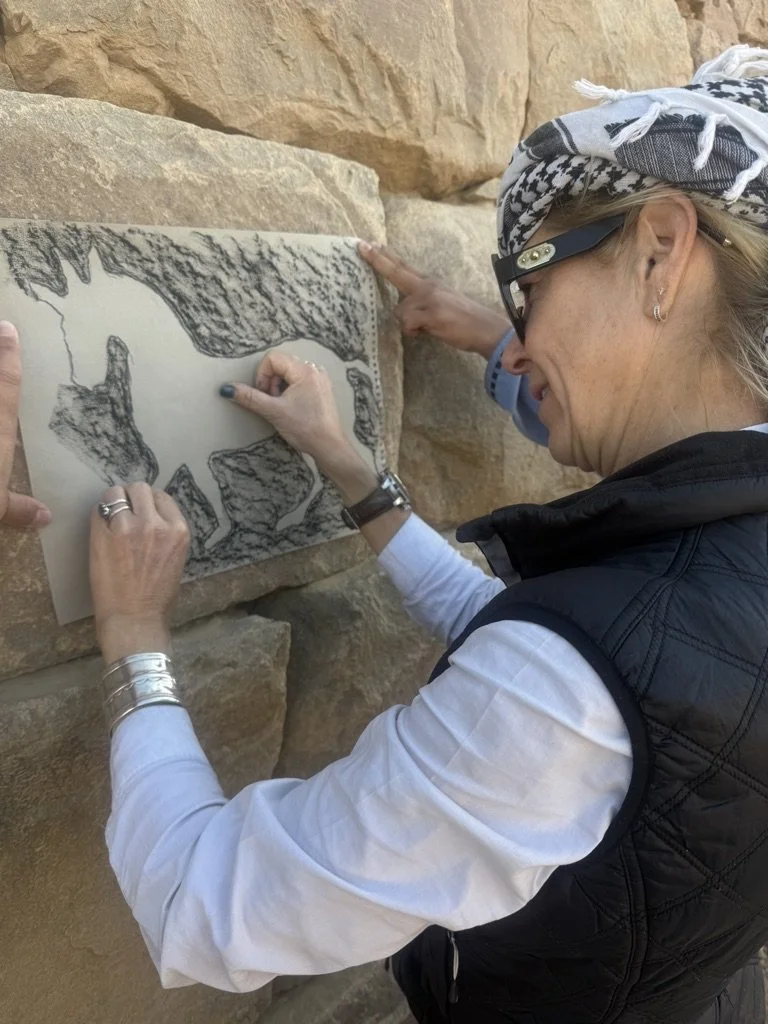
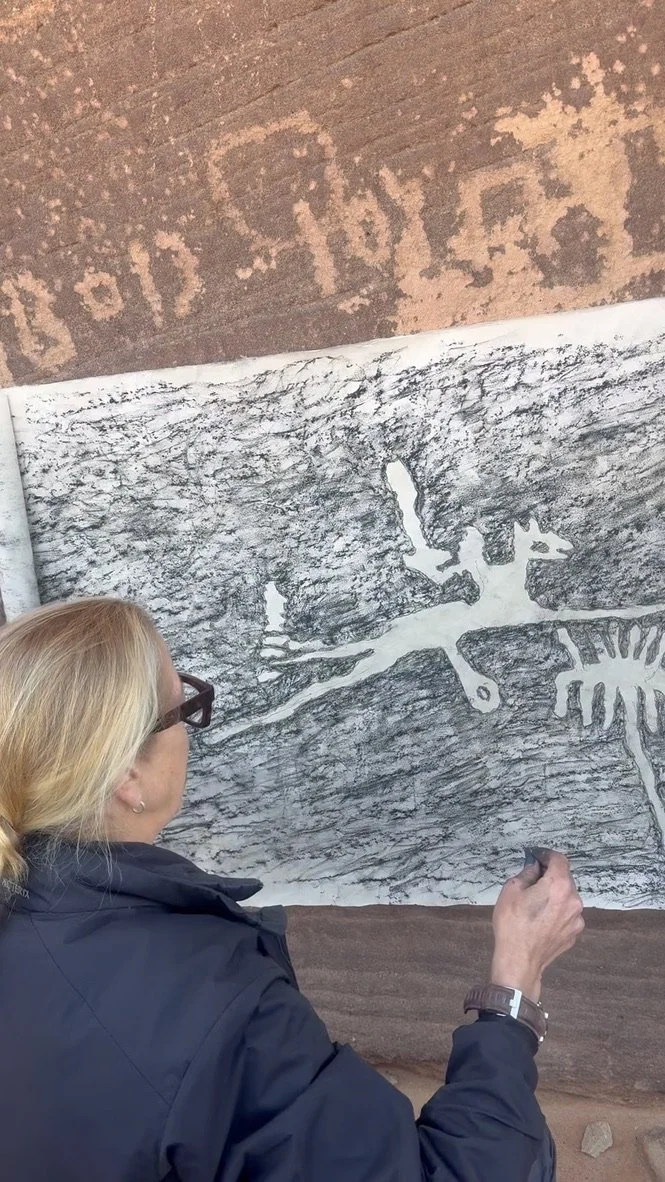
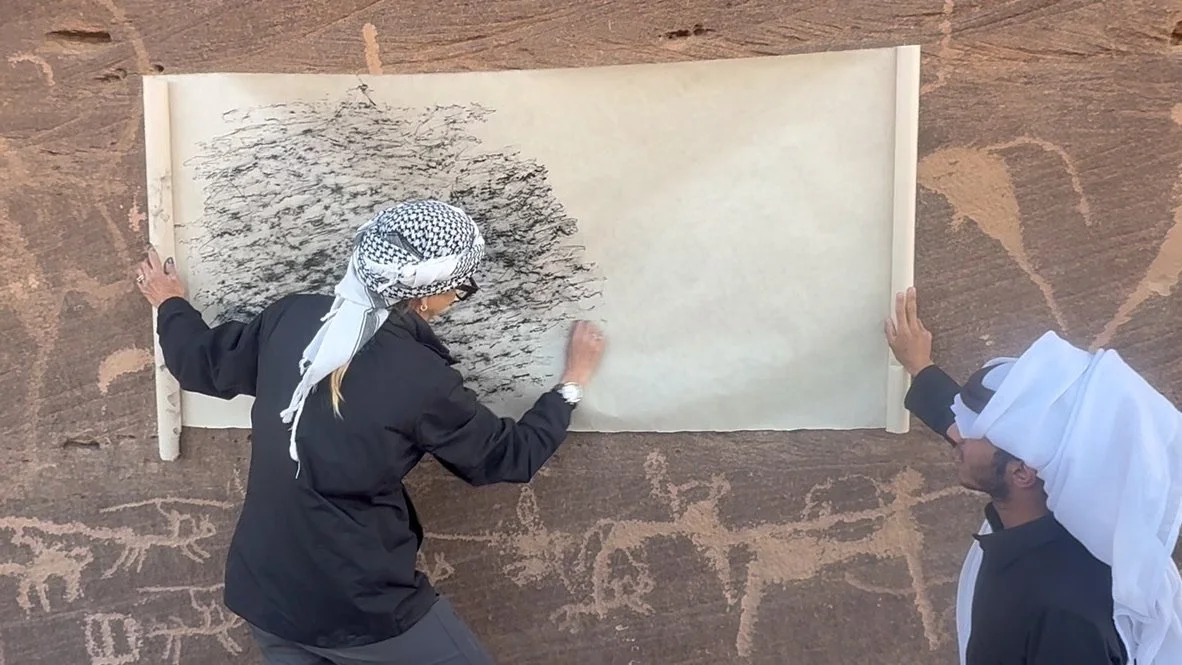
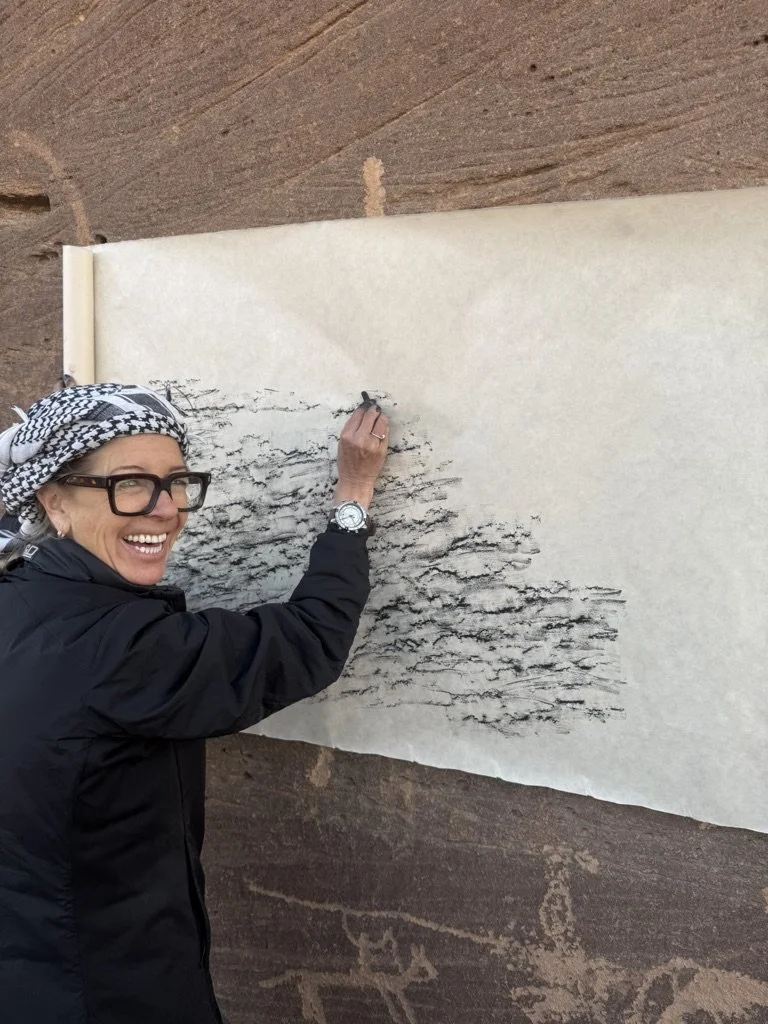
The rock art we encountered in the Hima region was a revelation. Southern Arabian petroglyphs are ancient rock carvings primarily found in Saudi Arabia’s Najran region, with sites like the Himā Cultural Area being significant examples. These petroglyphs, which date from the Neolithic period to pre-Islamic times, depict daily life, hunting, and animals, providing crucial insights into the region’s history and culture, and are recognised as globally important archaeological sites.
Lorem ipsum dolor sit amet, consectetur adipiscing elit. Vestibulum id ligula porta felis euismod semper.